The city of Cachiche, meaning place or land of salt, is synonymous with magic for many Peruvians.
The town of Cachiche, which means “place or land of salt” in Quechua, is synonymous with magic and mystery for many Peruvians. This small village on the outskirts of Ica is known throughout the country as the “village of the witches,” because it is the home of countless women who, according to local tradition, possess supernatural powers of healing and prophecy.
Over the centuries, Cachiche became a center of herbal and shamanic knowledge that blends the medicinal traditions of pre-Columbian cultures with African influences brought by colonial slavery, generating a healing practice unique in the world.
History of Witchcraft in Cachiche
The origins of the Cachiche witch tradition date back to the colonial period. During the 17th and 18th centuries, the Ica valleys received a significant African population brought as enslaved laborers to work in the region’s vineyards and cotton fields. This population contributed their own religious and medicinal traditions, which fused with the pre-existing herbal knowledge of local indigenous peoples and with the folk magic imported by Spanish colonizers.
The result was a unique cultural syncretism that gave rise to a local healing tradition especially developed in Cachiche. The women of the village — called “curanderas,” “healers,” or simply “witches” — developed deep knowledge of the medicinal plants of the Ica desert and the Andean valleys, and their services were sought by people from throughout the region.
The Spanish Inquisition persecuted some of these women during the colonial era, earning them the nickname “brujas” (witches) that they now wear with pride as part of their cultural identity.
The Most Famous Witch: Julia Hernández Pecho
The most legendary figure in Cachiche’s history is Julia Hernández Pecho Viuda de Díaz, who reportedly lived to the age of 106 and was the most renowned healer of her time. According to legend, Julia performed thousands of miraculous cures throughout her life, relieving physical and emotional ailments with her herbal preparations and rituals. She never practiced black magic: her specialty was love spells, healing ailments of the soul, and preparing remedies for bodily illnesses.
Today, the memory of Julia and the other healers of Cachiche lives on in the village and in the popular imagination of Ica. Her descendants continue to practice traditional herbal medicine.
The Witches Park
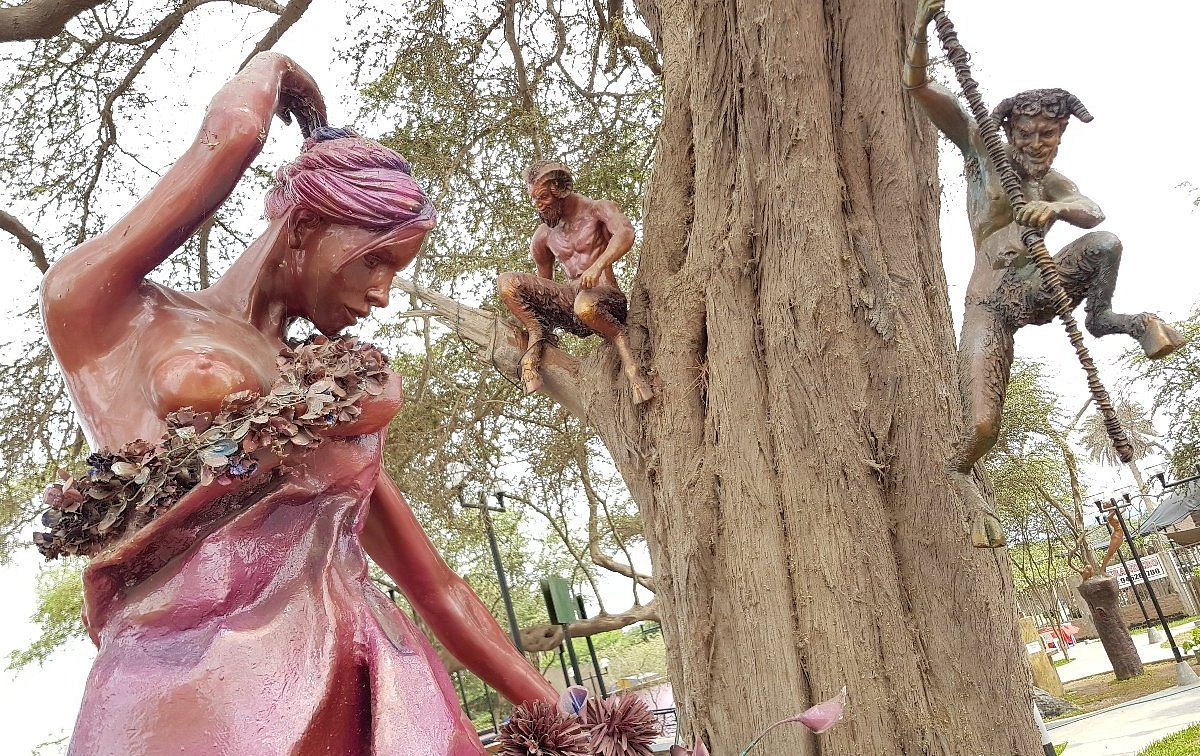
At the entrance to the village stands the Cachiche Witches Park, a themed space that celebrates and honors this tradition. The park features sculptures representing the village’s famous healers, as well as symbolic elements of witch culture: cauldrons, broomsticks, pointed hats, and animal figures traditionally associated with witches in popular belief.
The park is the usual starting point for visits to the village and is very popular for photographs, especially during the Halloween season when the village takes on a special festive atmosphere.
The Seven-Headed Palm Tree
The most famous and mysterious natural monument in Cachiche is the Seven-Headed Palm Tree: a very peculiar palm that does not grow upright but branches from the base, extending its trunks along the ground like the arms of an octopus.
According to legend, if the palm were ever to have seven main branches (today it has six), a catastrophe would occur that would flood the entire city of Ica. The legend has an echo in reality: according to locals, in 1998 a seventh branch was allowed to grow, and that same year the El Niño phenomenon caused severe flooding in Ica. Since then, the townspeople have kept watch over the palm and do not allow the seventh branch to grow.
Visitors can see and photograph the palm upon making a small symbolic donation, and local guides recount in detail the legend and its connection to the region’s climatic events.
Gastronomy of Cachiche
Cachiche and the Ica region have a rich gastronomic tradition that combines the produce of the coastal desert with African, Spanish, and Andean influences:
- Tejamanil: a traditional Ica dessert made with flour dough, lard, and cane syrup.
- Frijol colado: a sweet dessert of black beans, very popular in the region.
- Carapulcra: a stew of dried potato and meat, considered one of Peru’s oldest dishes.
- Iqueño pisco sour: Ica is the region with the highest pisco production in Peru and the area’s wineries produce top-quality piscos.
How to Get There
Ica - Cachiche
Bus: approx. 15 minutes
Hours
- Depends on the operator
Admission Price
- Depends on the operator