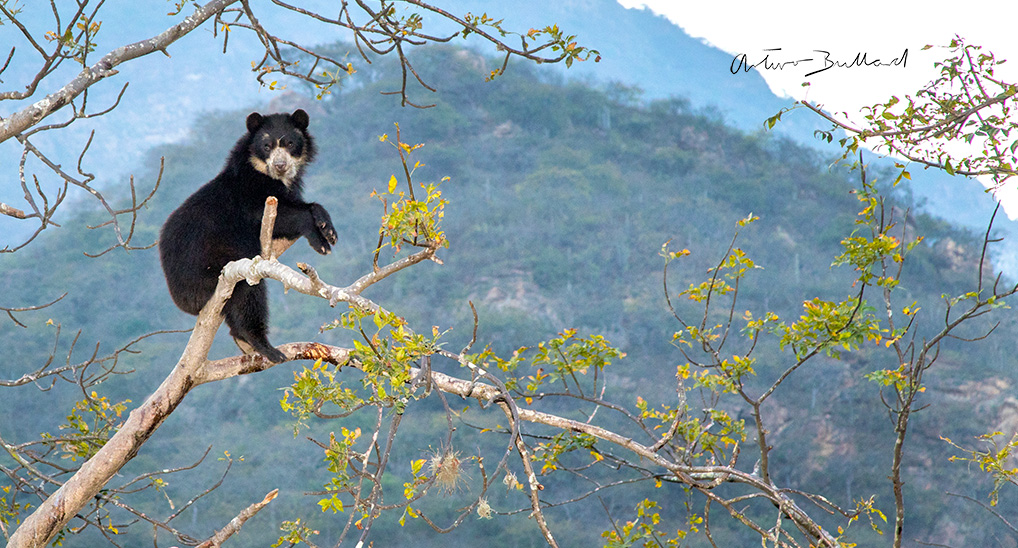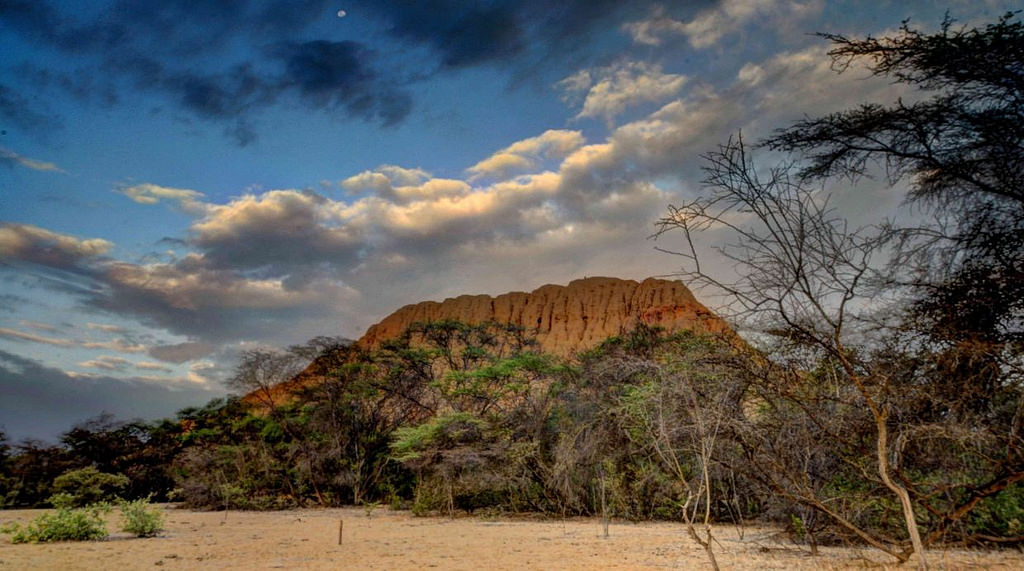
The Pómac Forest in Fereñafe, Lambayeque, is the most extensive carob tree reserve in the world and shelters the huacas of the Sicán archaeological complex of the Lambayeque culture.
The Pómac Forest Historical Reserve is a protected area of Peru located in the Province of Fereñafe, Lambayeque, which includes the Batán Grande Archaeological Zone within its natural landscape. It is one of four areas in the country designated as historical preservation zones.
The reserve protects species typical of dry forest and 36 pyramids of the Sicán culture. The Pómac Forest received the category of Historical Reserve in June 2001; it previously held the designation of Batán Grande Reserved Area. At Huaca El Oro, one of these pyramids, the King of Sicán and the famous golden mask were discovered in 1995 — a prominent symbol of the great power of the Sicán Kingdom. The La Leche River (also known as Lerkanlaech) flows through the sanctuary in the middle of this valley. Along its banks lie towns of Muchik origin that still preserve some ancestral traditions.
The reserve protects 0.2 percent of the total area of the Pacific tropical desert. It also boasts great biodiversity (especially birds, many of which are endemic), making it a major attraction for birdwatchers and general tourists alike.
The reserve is part of the northeastern tourist circuit and is a must-see for visitors. It is included within the broader region of Tumbes — encompassing the provinces of Tumbes, Piura, Lambayeque, and parts of La Libertad and Cajamarca — where a significant number of endemic species exist. The Sanctuary, together with the Laquipampa Wildlife Refuge located in the upper La Leche River area, forms an important biological corridor; both protected areas belong to Lambayeque.
Flora and Fauna
The fauna of the Pómac Forest Historical Reserve is distinctive and representative of the lowland coastal dry forests of northern Peru, dominated by carob trees. To date, 89 bird species have been recorded, 16 of which are endemic to the Tumbesian Endemic Zone and 5 endemic to Peru. Two species not found in any other protected area and highly prized by birdwatchers are the Peruvian plantcutter and the Tumbes swallow — both endangered and very rare in dry forests.
Also present are the coastal emerald hummingbird, the Peruvian thick-knee, the coastal miner, the white-tailed jay, the grey-and-white tyrannulet, the burrowing owl, the lineated woodpecker, the Ecuadorian ground dove, the Tumbes tyrant, the scrub blackbird, and the long-tailed mockingbird.
Among mammals, the Andean wildcat and the endemic Peruvian rice rat stand out. Reptiles include the rattlesnake and the macanche boa. The main plant species are the carob (algarrobo), the faique, the sapote, and the angolo.
Climate
The climate is dry, temperate, and sunny for most of the year. The rainy season runs from December to May. Especially in the highlands and forested areas, rain occasionally falls, but the La Leche River can rise so much that it nearly divides the forest in two. The hottest season is from December to May. Maximum temperatures in February and March average 33°C and can reach a peak of 36°C. The lowest temperatures are recorded between July and August, with an average of 11°C.
Main Route — The Millennial Tree
There is a large carob tree in the Pómac Forest that is more than 500 years old and is known as the “millennial tree.” Located just a few meters from the entrance, locals have attributed magical powers to it. It is quite striking due to its complex root structure. Following the main route, you can reach the Las Salinas Viewpoint, from which you can enjoy a panoramic view of the forest, some of the pyramids, and the La Leche River.
Cortarrama Route
This area of Lambayeque is perfect for birdwatching. More than 89 species inhabit this forest, including the Peruvian plantcutter (endangered), the Tumbes swallow, the tawny-crowned pygmy-tyrant, the buff-bridled inca-finch, the Tumbes tyrant, white-tailed jays, parakeets, and many more. The Cortarrama Route begins at the millennial tree and involves a 45-minute walk. Along the trail, in addition to the emblematic bird, you can observe woodpeckers and robins.
Old River Route
If you choose this route first, you will pass by the house of Karl Weiss, the region’s first honey producer. Dr. Weiss, a German advocate of beekeeping technology, welcomes visitors to his home to learn about his important work.
You can also visit Huaca La Merced, a ceremonial center known for the discovery of gold and silver objects. Research has shown that a necropolis destroyed by the La Leche River must once have existed there. At the top of this site is a nature viewpoint with a panoramic view of the forest and mountains.
How to Get There
Lambayeque - Chiclayo
Bus: approx. 30 minutes
Chiclayo City Center - Pómac Forest
Bus: approx. 1 hour 20 minutes
Hours
-
Monday - Sunday: 8:30 AM to 5:30 PM
-
Approximate schedule
Admission Price
-
Foreigners S/30.00 soles
-
Adults S/11.00 soles
-
Children S/5.00 soles
-
Locals S/5.00 soles
-
Local children S/3.00 soles
-
Approximate prices