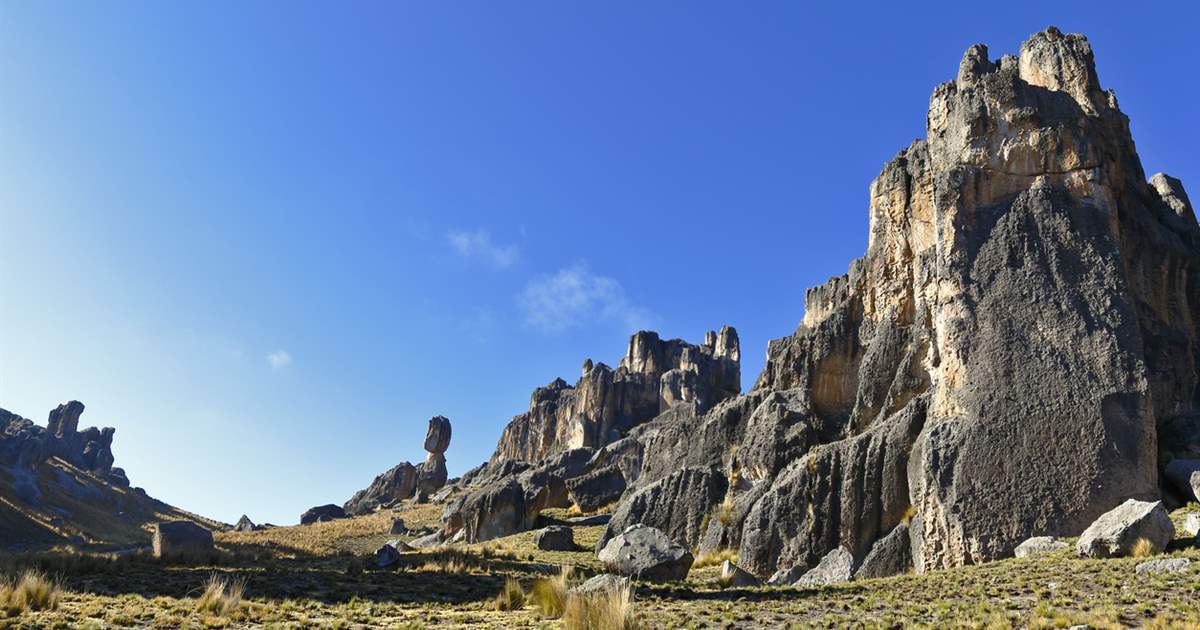
The Sachapite Stone Forest is located in the Andes mountain range in the province of Huancavelica, 20 km from the city of Huancavelica.
The Sachapite Stone Forest is located in the Andes mountain range, in the province of Huancavelica, 20 km from the provincial capital. The rock formations that characterize this place are attributed to the action of volcanic smoke and the cementation of volcanic ash over millions of years, creating a surprising landscape of rock columns and towers.
The formations are so imposing that they can be seen from the road, rising like stone sentinels watching over the Andean landscape. From the top of the forest, the panorama is even more impressive: a collection of strangely shaped rocks that, under certain lighting conditions, take on an almost mystical presence.
Origin and Formation of the Rocks
The rocks of the Sachapite Forest are the product of volcanic processes that occurred millions of years ago. The material expelled by the volcanoes of the region — primarily ash, lapilli, and rock fragments — was deposited in layers and consolidated by the minerals carried by groundwater.
Over the millennia, differential erosion — the faster wearing away of softer materials compared to harder ones — gradually sculpted the current shapes. Wind, rain, and the freeze-thaw cycles characteristic of the Peruvian Andes were the invisible sculptors that gave these stones their curious profiles.
The result is rock columns between 5 and 15 meters tall, some mushroom-shaped, others like towers, and some resembling human or animal figures. Sunlight — especially at sunrise and sunset — casts long shadows that intensify the sensation that these rocks are alive and in motion.
The Mystical Connection With Nature
For the Andean communities of the region, the Sachapite Stone Forest is not simply a geological formation: it is a space charged with spiritual significance. The rocks are considered Apus (mountain spirits) and are believed to have the power to predict the future or influence the destinies of those who visit with respect.
Local healers and shamans use the forest for ritual ceremonies, and locals note that at certain times of day the shadows cast by the stones form figures that can be interpreted as omens or messages. This spiritual dimension adds a layer of meaning that makes the visit more complete and immersive.
The Uchkus Inkañan Archaeological Complex
A few kilometers from the Sachapite Stone Forest lies the Uchkus Inkañan Archaeological Complex, also known as the “Inca University.” This important archaeological site is located in the district of Yauli, at 3,500 m above sea level, and has been declared a National Cultural Heritage Site.
Uchkus Inkañan was an important center during the height of the Great Lordship of the Anccaras (1200–1440 AD), which controlled population movement in the Ichu River area. The site was later incorporated into the Inca Empire by order of Pachacutec around 1460, with the participation of generals Tupac Yupanqui and Lloque Yupanqui.
Researchers interpret Uchkus Inkañan as an Inca astronomical observatory and agricultural experimentation center, equipped with a reflecting pool that allowed observation of the movement of celestial bodies. The precision of its constructions and the orientation of its structures support this hypothesis.
During the colonial and republican eras, the site fell into obscurity and was covered by vegetation. Its modern rediscovery and cataloguing have made it one of the most interesting archaeological attractions in Huancavelica.
The Paucará Stone Forest
At a short distance, in the province of Acobamba, lies another equally impressive stone forest: the Paucará Stone Forest. Its rock formations have characteristics similar to those of Sachapite and are equally visitable, allowing visitors to plan a day trip that includes both forests.
Visitor Recommendations
- Access to the Sachapite Forest is best done by private vehicle or taxi from Huancavelica. The roads are dirt tracks and conditions should be checked during the rainy season.
- Bring warm clothing: the altitude of the area and the Andean climate can produce sudden temperature changes.
- The visit can be combined with the Uchkus Inkañan Complex on the same day, adding a cultural and historical dimension to the natural landscape.
- Hiring a local guide who knows the history of the area is highly recommended.
How to Get There
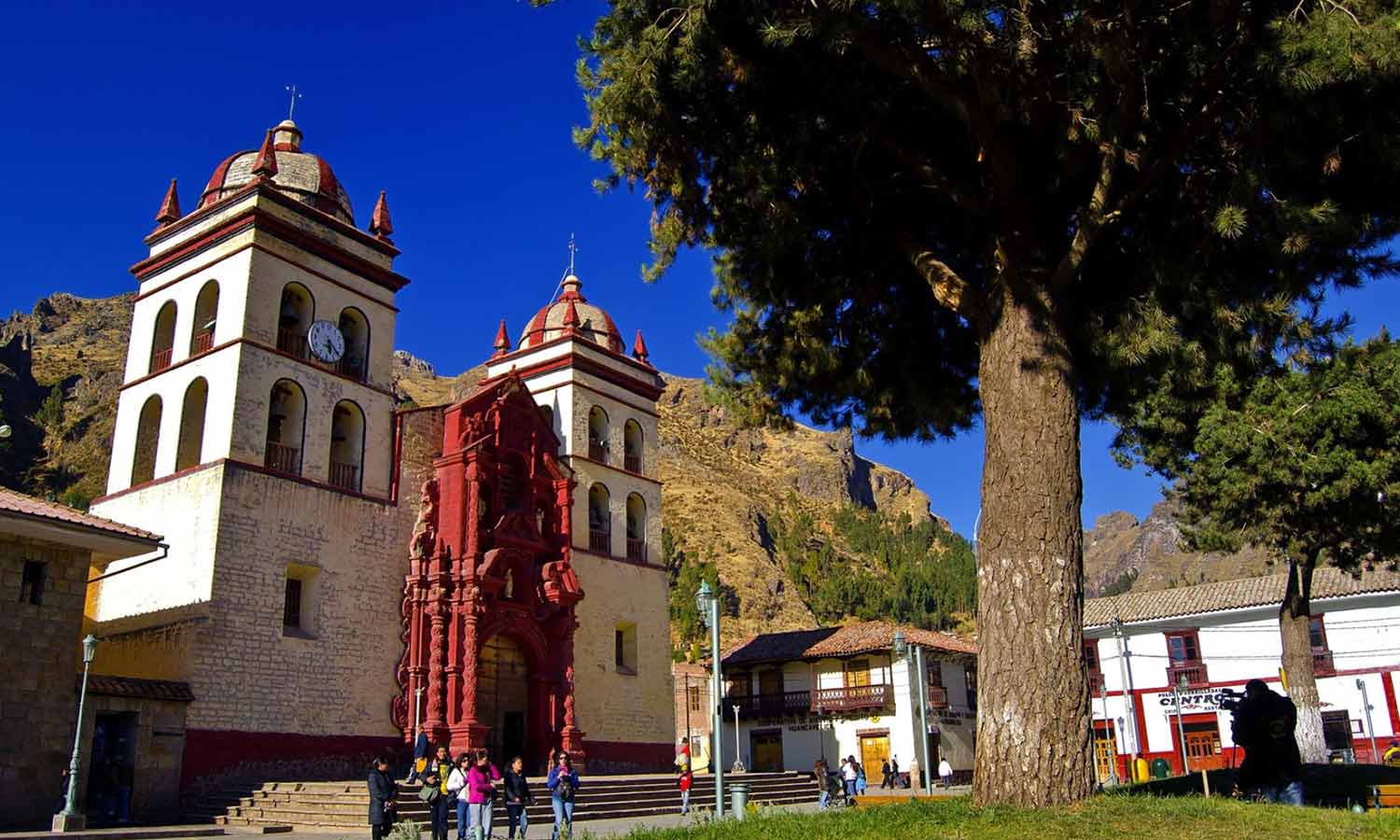
Huancavelica Plaza de Armas - Sachapite
Bus: approx. 30 minutes
Huancavelica Plaza de Armas - Uchkus Inkañan
Bus: approx. 36 minutes
Hours
- Depends on the type of visit and tour operator
- It is recommended to check directly at the site or with local agencies
Admission Price
- Varies by operator and tour type
- It is recommended to verify current prices before visiting