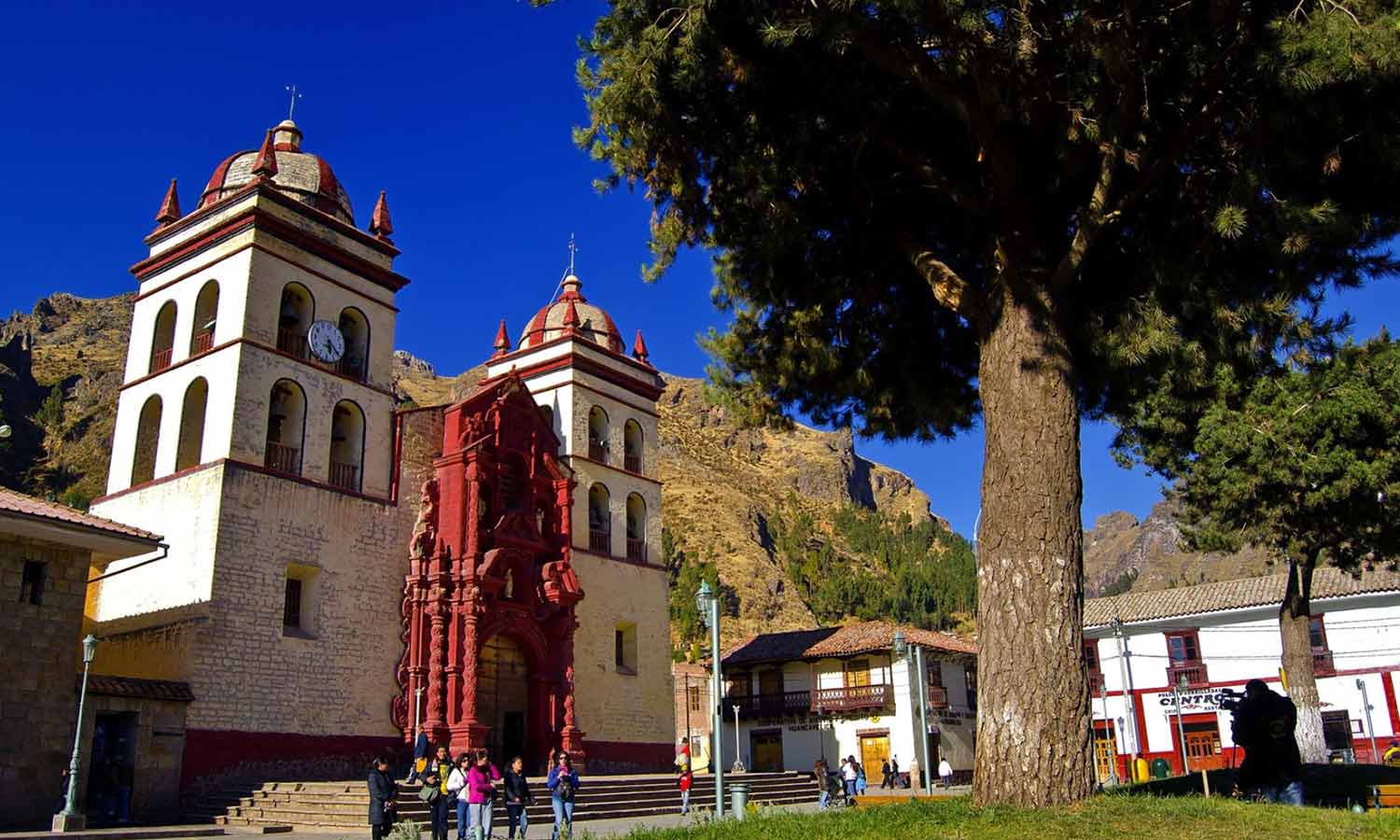
Located on the Plaza de Armas, it features a Baroque-style façade built with red stone brought from the Puka Rumi area. Located in Huancavelica, Peru.
The San Antonio de Huancavelica Cathedral is located on the Plaza de Armas, at the heart of the city’s historic center. It features a Baroque-style façade built with red stone brought from the Puka Rumi area. The temple has a carved wooden altar covered in gold leaf, and its walls preserve silver panels and canvases from the Cusco and Huamanga painting schools.
San Antonio Cathedral is considered one of the most important colonial temples in the Huancavelica region and in Peru, distinguished not only by its architecture but by the artistic heritage it shelters within its walls.
History of the Cathedral
The history of San Antonio Cathedral is bound to the colonial history of Huancavelica, a city that was one of the most important centers of the Viceroyalty of Peru due to its rich mercury mines, which were essential to the silver amalgamation process in Potosí.
From various historical sources it is known that construction of this church began around 1673, although there are indications that an earlier temple already existed on the same site from the early 17th century. The temple was the work of the Dominican friars who evangelized the region and is one of the last surviving testimonies of the building work of these religious orders in the Peruvian highlands.
The church was built during Huancavelica’s era of greatest prosperity, when the Santa Bárbara mercury mines produced millions of pounds of azogue per year and the city had a considerable population of miners, merchants, clergy, and colonial officials.
The Baroque Façade and the Red Stone
The most striking feature of the cathedral is its Andean Baroque-style façade, built in the unmistakable red stone of Puka Rumi (which means literally “red stone” in Quechua). This material gives the building an ochre-reddish color that contrasts with most colonial constructions in Peru, which are generally built in white stone or sillar.
The main portal is the most elaborately decorated part of the façade and presents two levels:
- On the first level, four spiral Solomonic columns flank the temple entrance. Between the columns and above the doorway, three angels in an inverted triangle arrangement can be seen in an ornamental role, appearing as guardians of the temple.
- On the second level, a niche contains the image of the patron saint, Saint Anthony of Padua, surrounded by floral and geometric decorative elements that combine the formal vocabulary of Spanish Baroque with Andean motifs characteristic of what is known as “mestizo Baroque.”
The two lateral towers crown the façade and house bells that are still rung during religious celebrations.
The Interior: Gold, Silver, and Colonial Art
The interior of the cathedral is remarkably rich for a city of Huancavelica’s size. The central nave is presided over by the High Altar, an exceptional piece carved in wood using bulk carving techniques and covered entirely in gold leaf. The silver applications decorating the altar were gifts from wealthy miners seeking divine favor for their ventures.
The side chapels contain secondary altars with sculptures and paintings from the 17th and 18th centuries. The collection of Cusco school canvases is one of the temple’s most valuable treasures: large-format paintings depicting scenes from the lives of saints, the Virgin, and biblical passages, in the characteristic style of Andean Baroque — solemn figures, intense colors, and backgrounds that blend gold with Andean landscapes.
Also noteworthy is a beautiful 17th-century mural preserved on one of the lateral walls, as well as the collection of liturgical ornaments — silver chalices, embroidered chasubles, monstrances — displayed on special occasions.
The City of Huancavelica
A visit to the cathedral is a good opportunity to explore the rest of Huancavelica’s historic center, which preserves several colonial churches in addition to San Antonio: the churches of San Francisco, Santa Ana, San Cristóbal, and Asunción, each with its own heritage value.
Huancavelica is also famous for its San Cristóbal hot springs, natural warm-water sources located near the city center. And just a few kilometers away are the historic Santa Bárbara mines, declared a National Cultural Heritage Site for their importance in Peru’s mining history.
How to Get There
Lima - Huancavelica
Bus: approx. 10 hours
Huancavelica - San Antonio Cathedral
Bus or car: approx. 3 minutes
Hours
- Depends on the type of visit and tour operator
- It is recommended to check directly at the site or with local agencies
Admission Price
- Varies by operator and tour type
- It is recommended to verify current prices before visiting