Tingo María National Park in Huánuco protects the biodiversity of the Huallaga Valley, featuring the famous Cave of the Owls and the La Bella Durmiente mountain range.
This is a biological reserve located in the department of Huánuco, Peru. It sits in the Huallaga Valley and protects the beautiful mountain range known as La Bella Durmiente (The Sleeping Beauty), which rises over the town of Tingo María, cloaked in lush forests and sheltering a complex underground landscape.
Established in 1965, it is the second natural reserve in Peru. It is home to unique biodiversity of the high-jungle region and possesses a very special scenic beauty. One of the park’s most distinctive features is the mountain formation that resembles a reclining woman, known as “La Bella Durmiente.”
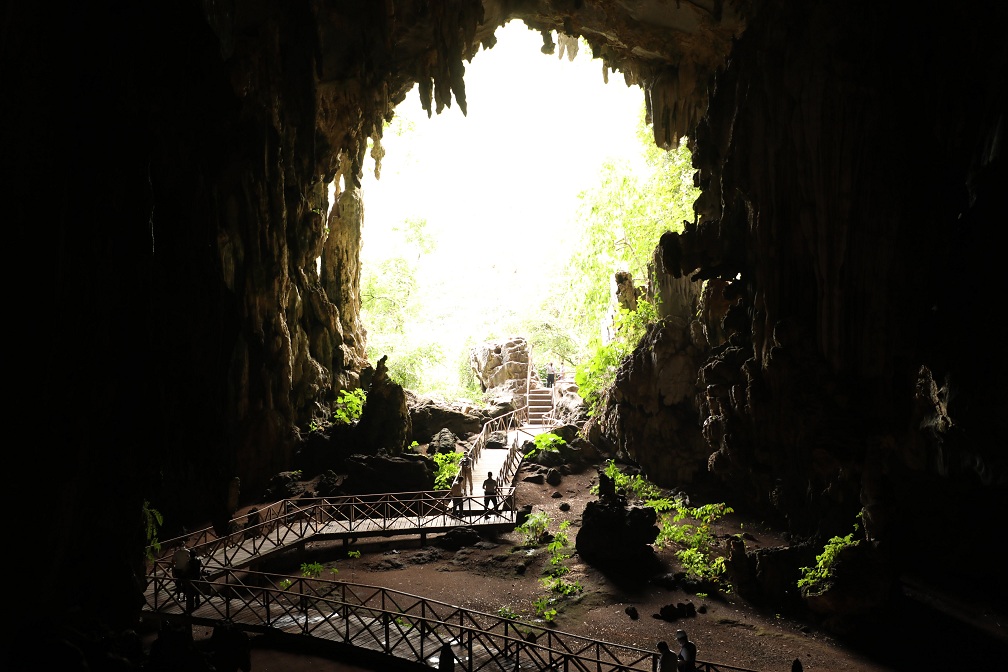
Among the main attractions are the Cueva de las Lechuzas (Cave of the Owls), a large underground cave complex within the La Bella Durmiente massif, several hot springs, and places of singular natural beauty. The park protects an extraordinary range of flora and fauna and serves as a model for improving the social and economic conditions of surrounding communities while promoting local tourism.
Cave of the Owls
The name “lechuza” (owl) comes from a traditional misidentification of the birds most characteristic of the cave’s interior — which are actually oilbirds (guácharos), not owls. Accessed through an imposing entrance measuring approximately 20 x 25 meters situated at 673 meters above sea level, this cave is probably the biggest tourist attraction of Tingo María National Park and holds significant conservation value.
It is a large karst cavern with beautiful rock formations, whose galleries have not yet been fully explored. It shelters an important population of oilbirds, as well as several bat species, which coexist with parakeets, swallows, and other birds.
Beyond the vertebrates mentioned above, this speleological system harbors both rare and common arthropods that feed directly or indirectly on the seeds brought in by the oilbirds and their droppings. Arachnids, insects, centipedes, millipedes, crustaceans, fungi, and bacteria all draw nutrients from the organic material derived from the birds.
La Bella Durmiente
The national park was born around La Bella Durmiente — the mountain range that dominates the town of Tingo María. Viewed from the town, it evokes the silhouette of a woman lying in the grass. According to local tradition, she watches over Tingo María and its forests. It is also said that the spirit of misfortune sometimes stirs and causes heavy rains to fall on the city.
Located just above 600 meters in altitude, Tingo María is a tropical town par excellence, surrounded by a beautiful high-jungle setting dominated by cloud forest scenery. The area features limestone crags that form cliffs, caves, waterfalls, and sinkholes that literally swallow entire rivers and expel them from the depths of the forest, crystal clear and pristine. It is also one of the newest cities in the Amazon region.
How to Get There
Lima – Huánuco
Bus: approx. 8 hours
Flight: approx. 1 hour
Huánuco – Tingo María National Park
Bus: approx. 1 hour 30 minutes
Hours
- Depends on the type of visit and tour operator
- It is recommended to check directly at the site or with local agencies
Admission Price
- Varies by operator and tour type
- It is recommended to verify current prices before visiting