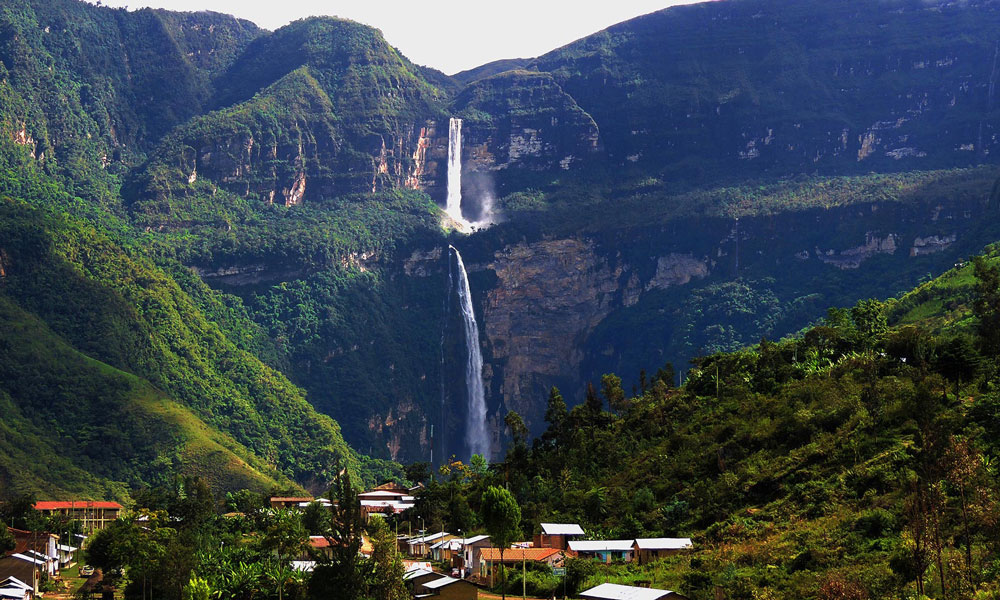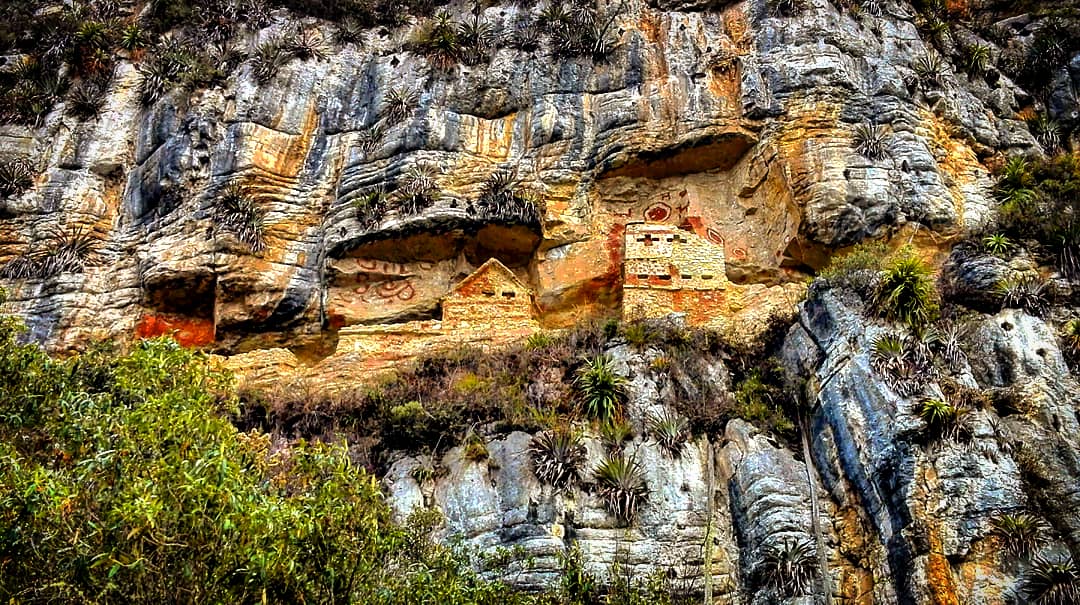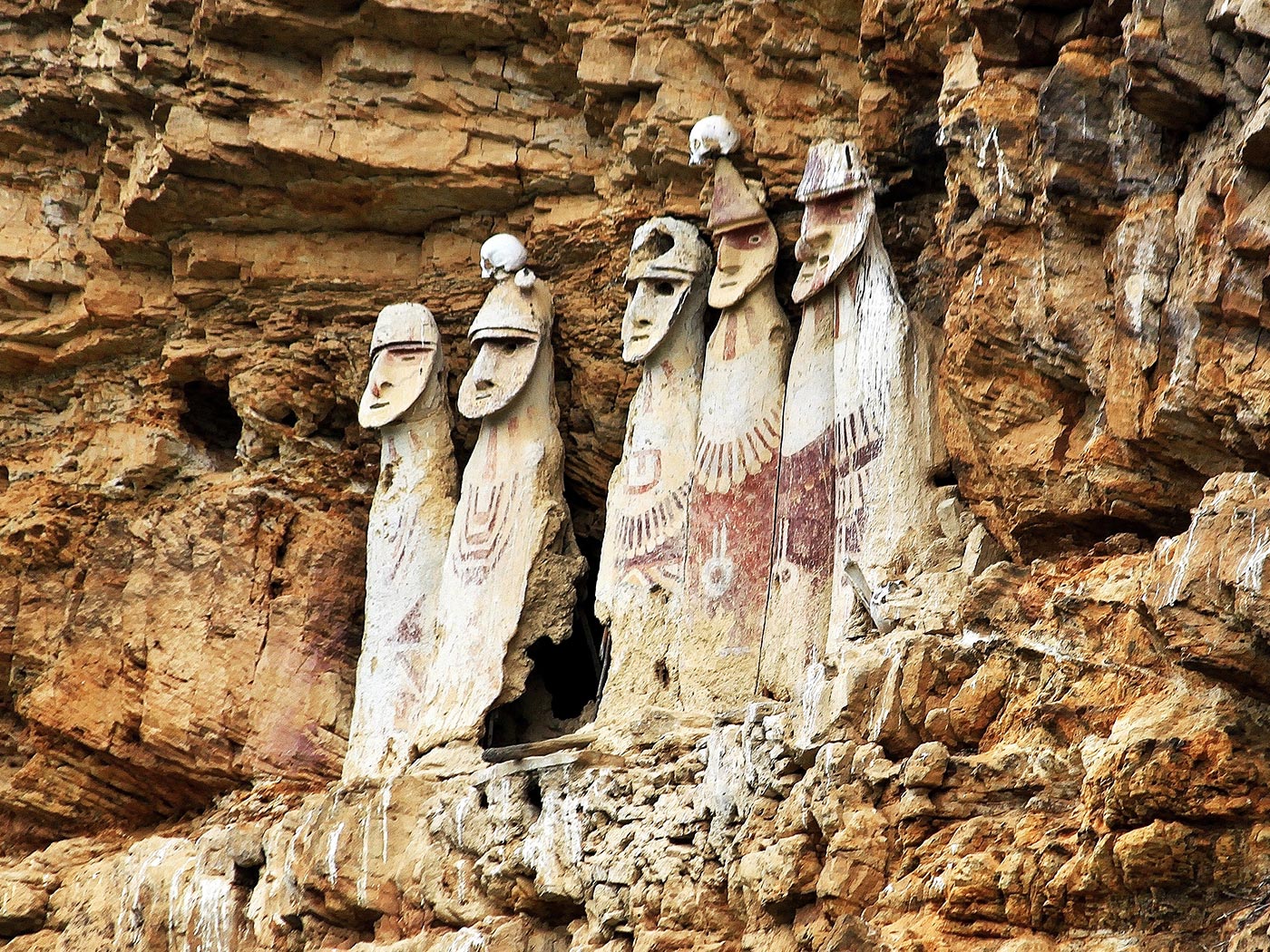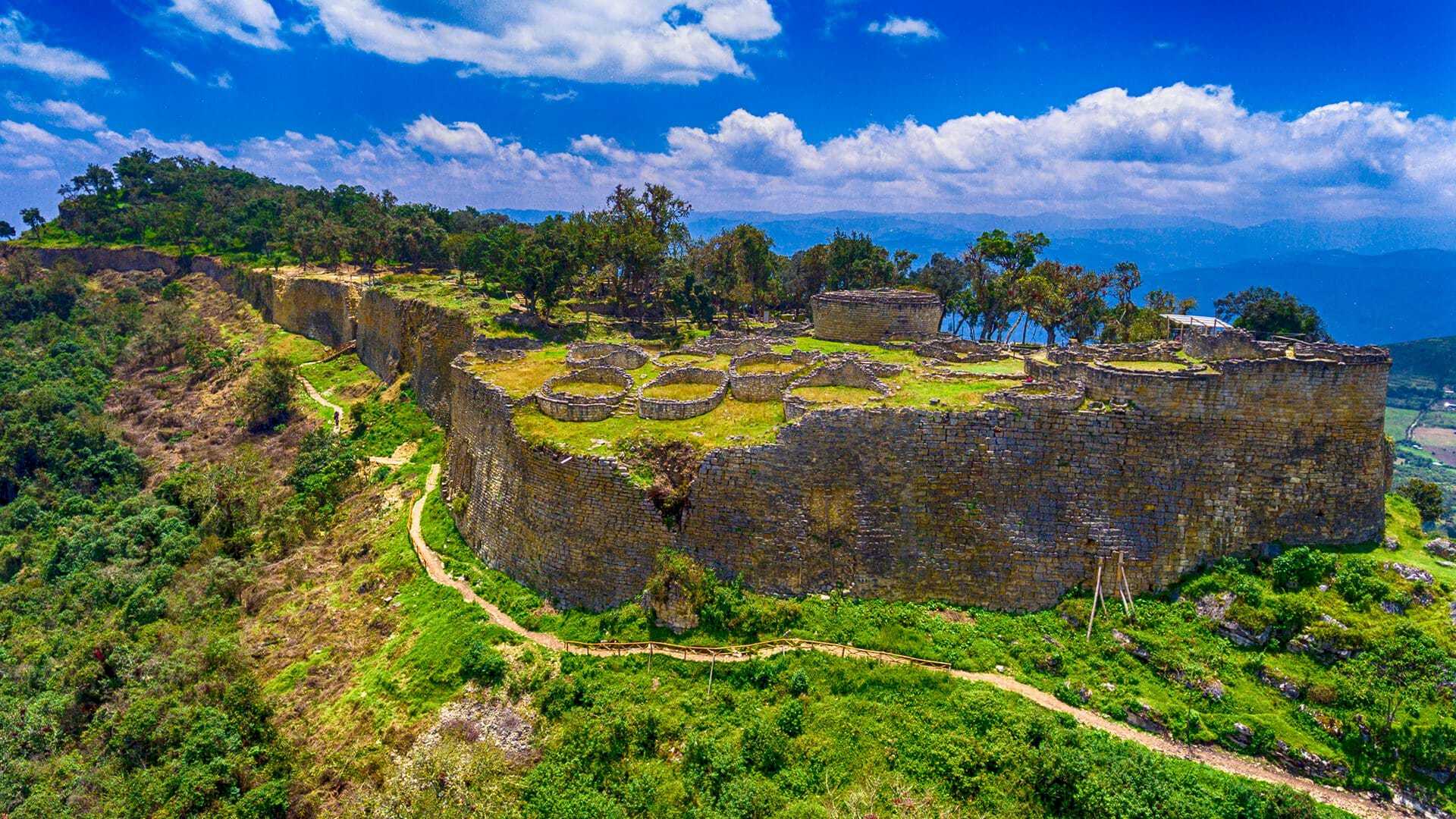
Kuelap is the great stone fortress of the Chachapoyas culture, built above the Utcubamba valley in Amazonas at over 3,000 meters above sea level.
Kuelap is located in the upper part of the Utcubamba River valley, near the small village of Kuelap in the district of Tingo, province of Luya, state of Amazonas (Peru), at an altitude of 3,000 meters. For reference, it lies 35 kilometers south of the modern city of Chachapoyas. The climate is warm during the day (26 to 35 degrees Celsius) and cool at night, with occasional rainfall between December and April.
After Diego de Alvarado abandoned and forgot about Kuelap in 1532, the city remained largely unknown until 1843, when don Juan Crisóstomo Nieto, a judge from the city of Chachapoyas, was brought here to resolve territorial disputes. He was taken to the top of the hill, and to his amazement he saw a great wall with finely carved stones, upon which stood hundreds of houses, also made of stone. He was so impressed that he wrote a report titled “The Tower of Babel in Peru” for the Lima Geographical Society, which published it in its Bulletin many years later.
In the years that followed, the archaeological site attracted the interest of researchers such as Italian scientist Antonio Raimondi in 1860, Charles Wiener, Adolf Bambier, Swiss geologist Arturo We. A complete and detailed description of the site was carried out between 1985 and 1987, along with studies by Terman, Lules Langlot, Paul Henri Reichlen, and archaeologist Alfredo Narváez in subsequent decades up to the present day.
Construction of Kuelap
Kuelap consists of two enormous artificial platforms on which a city of approximately 450 hectares was built. Viewed from the air, it resembles the wing of a slender bird pointing north and south, with an average length of about 584 meters and a width of about 120 meters. Some experts estimate that up to 25,000,000 cubic meters of material were used in its construction.
Around 505 houses were found, most of which had rounded bases. Approximately 200 additional dwellings were found outside the fortress walls.
Construction is estimated to have begun around the 11th century, coinciding with the height of the Chachapoya culture, and occupation ended in the mid-16th century. Its massive walls and complex interior architecture suggest it functioned as a well-organized residential complex that included administrative and religious buildings, ceremonial halls, and permanent residences.
Main Entrance
The main entrance indicates it was used by high-status individuals — not only because of its form and architectural details, but also because of the arrangement of various stone blocks in its construction, which are decorated with religious symbols including mythical faces and serpents carrying deep religious meaning. This section preserves evidence of the site’s growth, including large persistent fill layers that allowed the passage to expand both in height and width toward the interior.
The Great Temple
The Great Temple is one of the most important sacred centers of the monument. This building, shaped like an inverted truncated cone, measures 13.5 meters in diameter at its upper section, where numerous pieces of evidence of offerings from complex rituals have been recorded — including the placement of human bones inside the interior container, which thus became a large ossuary. Around the building, various human burials and offerings have been found originating from the northern coast, as well as from the highlands of Ayacucho in the south and Cajamarca in the northern highlands.
Circular Platform
The circular platform is located on the southern wall of the site and has features closely related to the dimensions of the temple. The ritual activities of this temple platform were central to its functions.
Kuelap’s final occupation involved a mass killing, carried out entirely within the platform, by a well-organized local group as part of a power conflict, followed by a fire that marked the last days of occupation of this site. One of these tragic events likely occurred around 1570, when Spanish colonial powers introduced a system of forced indigenous resettlements. At the center of this platform there is an ossuary similar to the one inscribed in the upper middle section of the Great Temple.
How to Get There
Chachapoyas - Nuevo Tingo
Bus: approx. 1 hour
Nuevo Tingo - Tourist Stop
Bus: approx. 10 minutes
Tourist Stop (La Malca) - Kuelap
Hike: approx. 30 minutes
Hours
- Tuesday - Sunday: 8:00 AM to 5:00 PM
- Approximate schedule
Admission Price
- Adults S/30.00 soles
- Students S/15.00 soles
- Cable car round trip S/25.20 soles
- Approximate prices
Tourist Activities
Tourists can take photos from the cable car.
Hiking to the Kuelap Fortress.