The Karajia Sarcophagi are an important pre-Inca funerary relic, whose construction is attributed to the Chachapoya culture.
The Karajia Sarcophagi are an important pre-Inca funerary relic, whose construction is attributed to the Chachapoya Culture, also known as the “Warriors of the Clouds.” They are located in the district of Conila, province of Luya, in the Amazon region, at an altitude of approximately 2,600 meters. They are estimated to have been built between 1000 and 1300 AD.
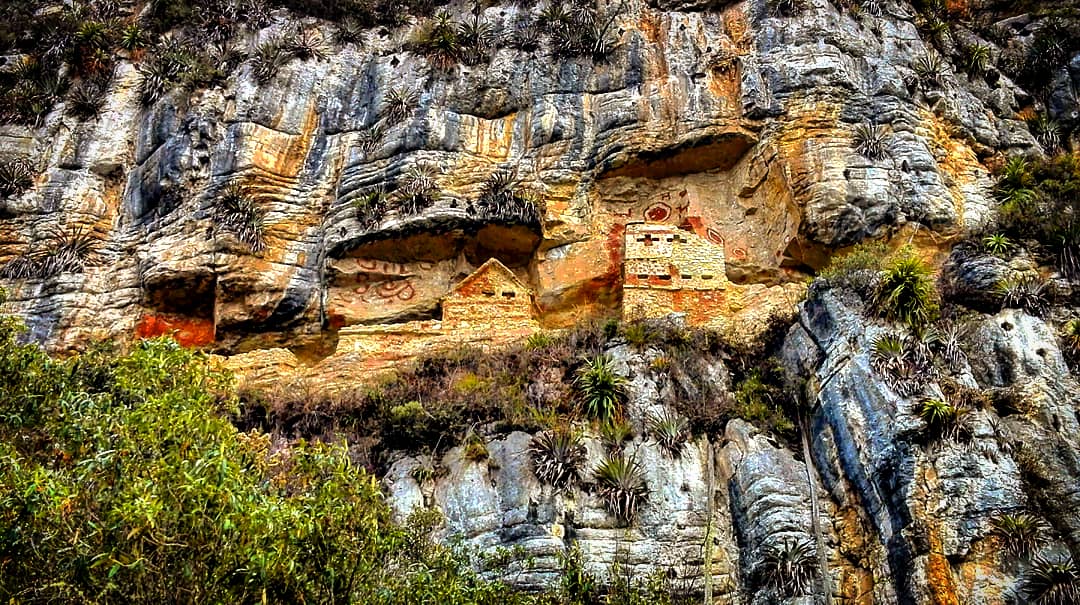
What makes these tombs truly unique is their location: the sarcophagi are embedded in the vertical face of a rocky cliff, unreachable from above or below, gazing eternally toward the eastern horizon where the sun rises each day.
The Chachapoya Culture
The Chachapoya were a civilization that inhabited the cloud forests of the Amazonas region of Peru between the 8th and 16th centuries AD. Their territory stretched across the eastern slopes of the Andes, a region of mist forests, waterfalls, and precipices that profoundly shaped their culture and architecture.
The Chachapoya were known for their warrior spirit, their constructions in hard-to-reach places, and their masterful stonework. They were incorporated into the Inca Empire by the Inca Túpac Yupanqui in the 15th century, but maintained notable resistance. During the Spanish conquest, many Chachapoya allied with the conquistadors against the Incas, revealing just how deep their opposition to Cusco’s rule had been.
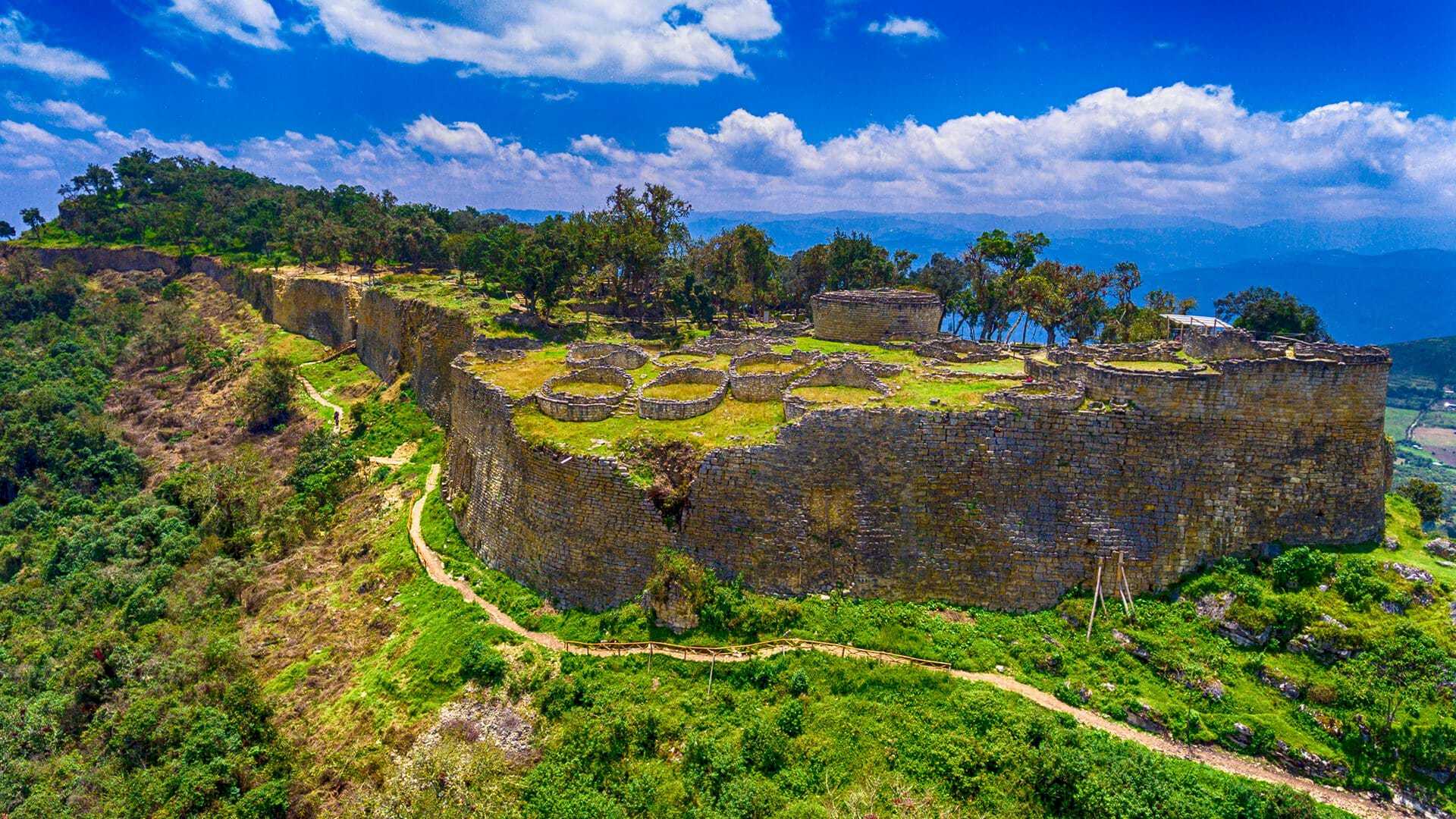
Their legacy is preserved in dozens of archaeological sites scattered throughout the Amazonas region, the most notable of which include the Kuélap Fortress, the Revash Mausoleums, and the Karajía sarcophagi themselves.
Description of the Sarcophagi
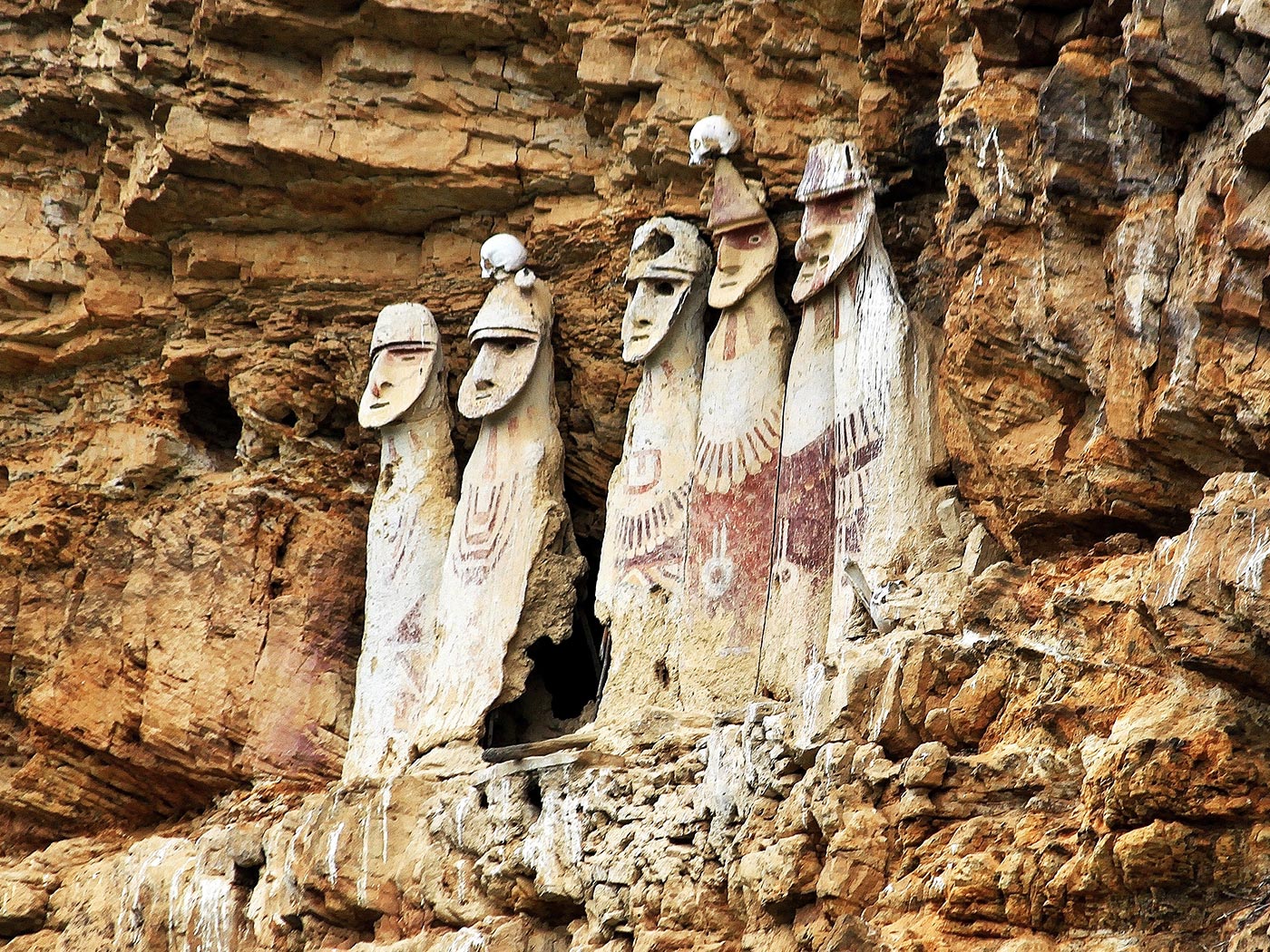
The sarcophagi are human-shaped clay figures, approximately 2.5 meters tall, designed to contain the mummified remains of the most important members of the Chachapoya elite.
The physical characteristics of the sarcophagi are unmistakable: they have a prominent head with a projecting nose resembling a bird of prey’s beak, exaggerated jaws, and arms crossed over the chest. On the heads of several sarcophagi, “trophy skulls” can be observed — small skulls placed as decoration or crowns that lent majesty to the figure and possibly represented victories in battle.
The sarcophagi are made from a mixture of clay, dry straw, reeds, sticks, and plant fibers. Each one features geometric decorations painted in colors that are now quite faded, but which must have been vivid and striking in their time.
The Six Tombs of Karajía
The Karajía complex that can be visited today consists of six sarcophagi placed in a row inside a horizontal crevice in the rock, about 30 meters above the ground. The sarcophagi face east, toward where the sun rises every day, and this is no coincidence: for the Chachapoya, the east symbolized rebirth and the possibility of an afterlife.
The decision to place the tombs in completely inaccessible locations served multiple purposes: to protect the remains from looting (by humans and animals), to keep the deceased close to the sky and in contact with Hanan Pacha (the upper world), and to create a visually powerful presence that reminded the living of the existence and power of their ancestors.
Each sarcophagus contains the remains of a high-ranking individual, previously mummified and placed in a fetal position, wrapped in multiple layers of textiles. Alongside the remains, objects of everyday and ceremonial use were placed: ceramics, tools, adornments, and food offerings.
The Trek to Karajía
Reaching the sarcophagi requires a hike of approximately 30 minutes from the hamlet of Cruzpata. The trail is of moderate difficulty, with some steep sections that require good physical fitness. Along the way, you pass through vegetation typical of the cloud forest: ferns, bromeliads, orchids, and moss-covered trees.
The view of the sarcophagi from the designated observation point at the foot of the cliff is breathtaking. The sheer height of the cliff, the elevation at which the figures are positioned, and the perfection of the forms create in the visitor a blend of admiration and mystery.
Activities in the Area
- Nature walk with observation of orchids blooming in the humid forests along the trail.
- Bird watching: the Luya region is extraordinarily rich in birdlife. It is possible to photograph hummingbirds, toucans, and various species endemic to the cloud forest.
- Handicraft shopping in the village of San Miguel, located along the route to Karajía.
How to Get There
Chachapoyas - Cruzpata
Bus: approx. 2 hours
Cruzpata - Karajía Sarcophagi
Hike: approx. 30 minutes
Hours
- Monday - Sunday: 8:00 AM to 5:00 PM
- Approximate schedule
Admission Price
- General S/5.00 soles
- Approximate price
Tourist Activities
Nature walk with orchid observation.
Bird watching and wildlife photography.
Handicraft shopping in the village of San Miguel.