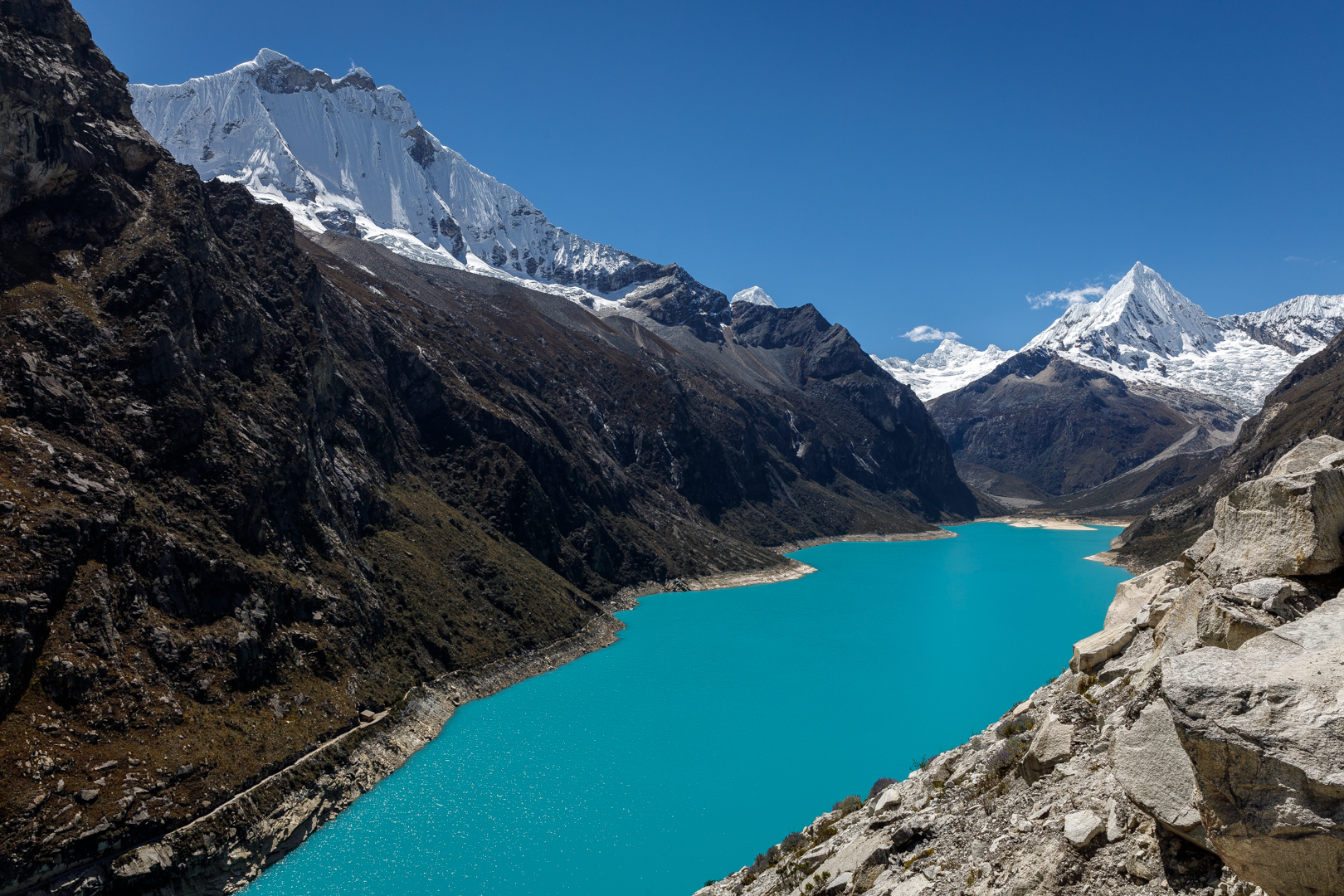
Lake Parón in Caraz is the largest glacial lake in the Cordillera Blanca, Áncash, with turquoise waters surrounded by snow-capped peaks, ideal for trekking and kayaking.
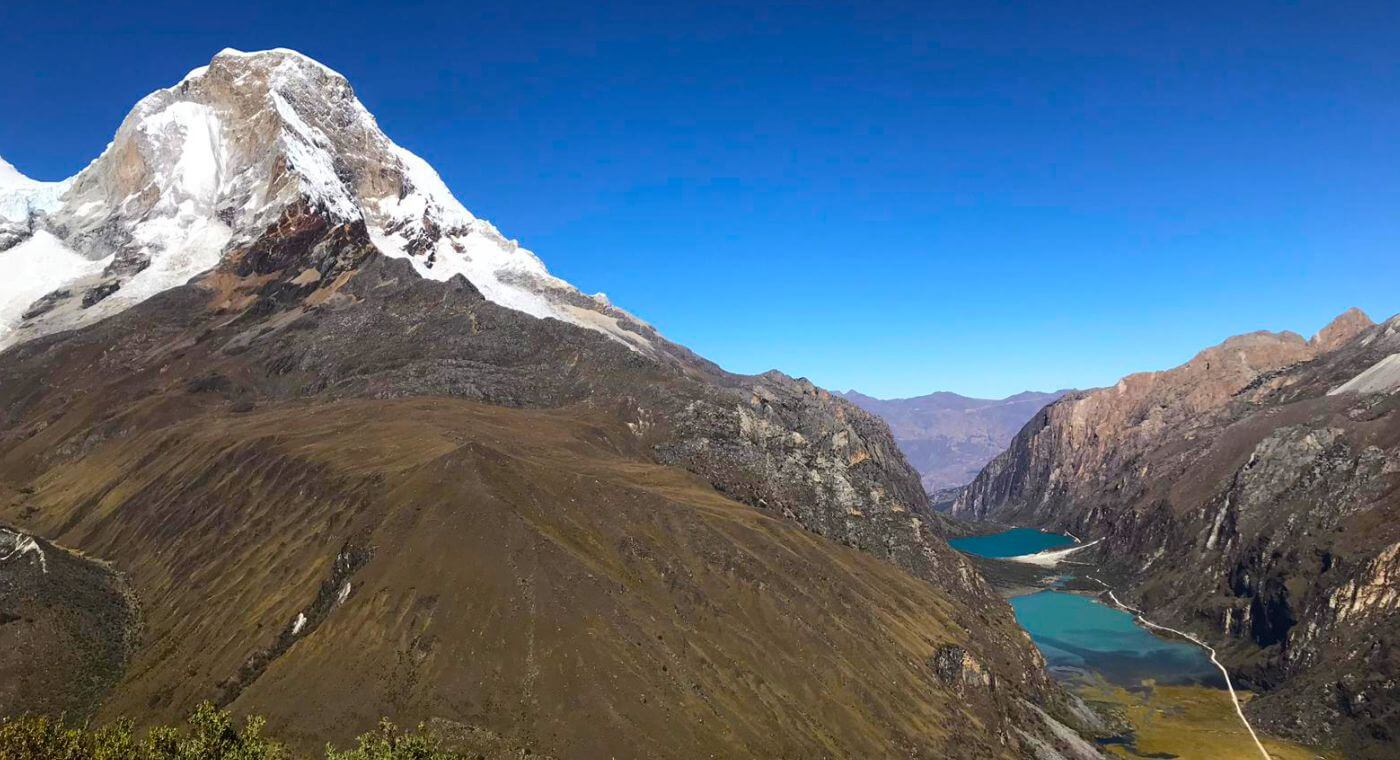
Lake Parón is considered the largest glacial lake in the Cordillera Blanca, located 32 km from the city of Caraz (founded in 1573 as San Ildefonso de Caraz), capital of the province of Huaylas in Áncash. Its waters display a beautiful sky-blue color, and from its shores you can admire some of the most imposing snow-capped peaks in Peru.
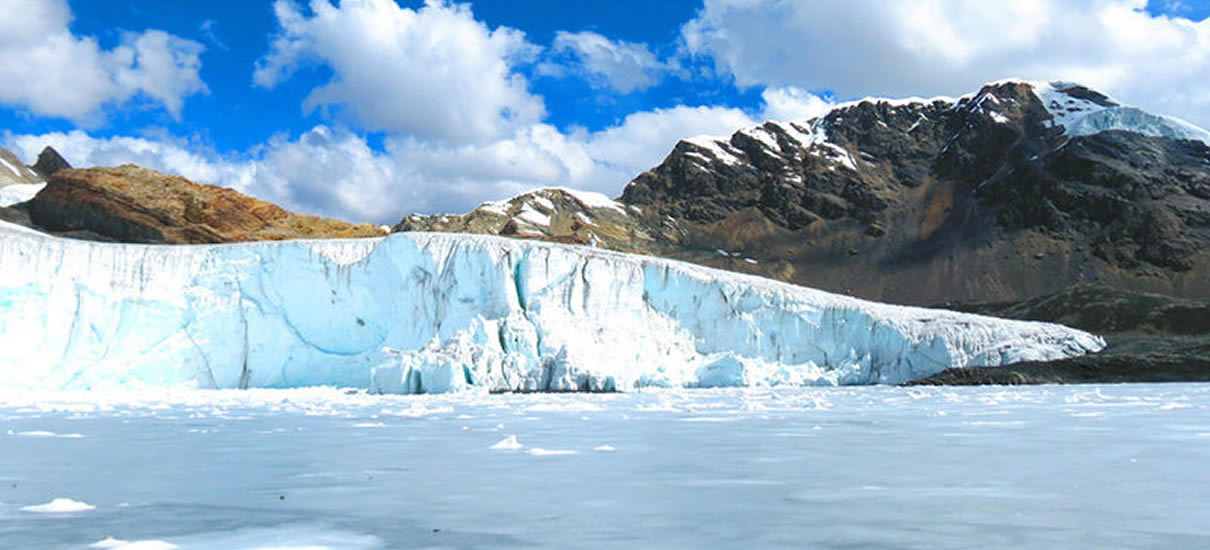
The lake sits at over 4,200 meters above sea level and measures 3,500 meters long by 700 meters wide at its broadest point. Its volume stores approximately 55 million cubic meters of water from the surrounding glaciers.
The Mirror of Water and the Glaciated Peaks
The main attraction of Lake Parón is the panorama it offers from its shores. On clear days, a sweeping arc of imposing snow-capped peaks can be clearly seen framing the lake:
- Artesonraju (6,025 m): the most iconic glacier in the Parón area. Its near-perfect ice cone is said to have inspired the Paramount Pictures logo, though this claim is widely debated. Its reflection in the waters of the lake is one of the most sought-after photographs by visitors.
- Pisco (5,752 m): one of the most frequently climbed peaks in the Cordillera Blanca due to its relative accessibility.
- Huandoy Norte (6,395 m): one of the highest summits in the region, visible from many points along the valley.
- Chacraraju (6,112 m): known for its pointed profile and challenging vertical face.
Caraz: The City of Sweets
The city of Caraz is the starting point for reaching the lake and well worth a visit in its own right. Unlike Huaraz, which was destroyed by the 1970 earthquake, Caraz preserved much of its colonial architecture and has a calm and welcoming atmosphere.
Caraz is famous throughout the region for its milk sweets, popularly known as “manjar de Caraz.” The city’s shops and markets sell this artisan product made from fresh milk from the Andean valleys. Taking home a box of Caraz sweets has become a tradition for visitors.
The city also offers access to attractions such as the Tumshukaiko Archaeological Center, remains of a pre-Inca settlement on the outskirts of town, and the Caraz Museum which displays pieces from the Recuay culture and objects from daily Andean life.
The Route to the Lake
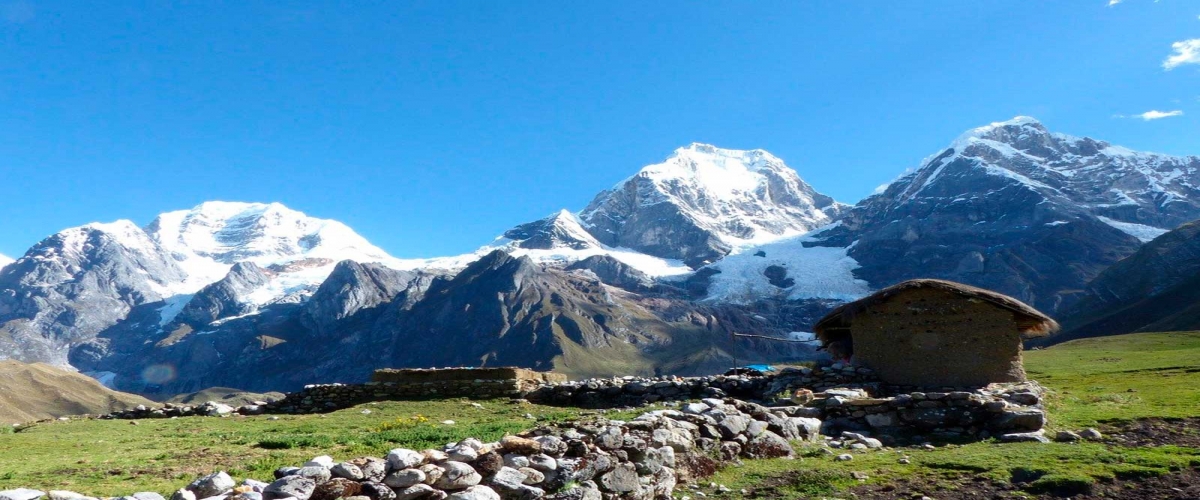
The road from Caraz to the lake covers 32 kilometers along a gravel road that gradually climbs through ravines and mountain scenery. Along the way, small rural communities appear with their cornfields, potato plots, and bean crops, and the views of the snow-capped peaks grow progressively more breathtaking.
The final stretch is the most spectacular: the road follows the lake’s outflow channel and arrives at the parking area, from which it’s a short walk to the shoreline.
What to Do at the Lake
- Walk along the shores: a trail allows visitors to circle part of the lake, offering different views of the glaciated peaks at each turn.
- Landscape photography: sunrise and the early morning hours are the best times, when the water is calm and the reflections are sharpest.
- Picnic: many families and groups organize picnics on the lakeshores while enjoying the scenery.
- Wildlife watching: Andean waterfowl such as the Puna teal and the Andean flamingo can be observed here.
Recommendations
- Access to the lake may be restricted or controlled by the local rural community; it is advisable to check access conditions before visiting.
- The altitude exceeds 4,000 meters above sea level, making prior acclimatization in Caraz or Huaraz essential.
- Bring warm clothing and high-factor sunscreen.
- The trip can be made by taxi or on an organized tour from Caraz or Huaraz.
How to Get There
Lima – Pativilca – Huaraz
Bus: approx. 8 hours
Huaraz – Caraz
Bus: approx. 1 hour
Caraz – Lake Parón
Taxi or tour: approx. 1 hour
Hours
- Depends on the operator
Admission Price
- Depends on the operator