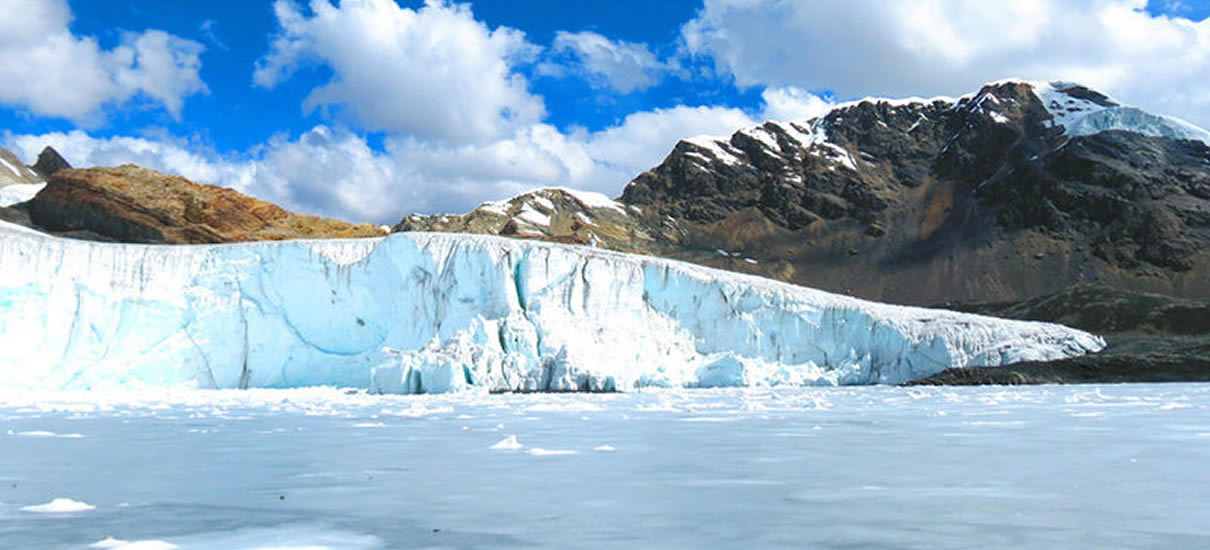
Pastoruri Glacier is a tropical glacier at 5,240 m in Huascarán National Park, Áncash, and a living testament to the impact of climate change in the Andes.
Pastoruri Glacier is a mountain in central Peru, located in the district of Aquia, Province of Bolognesi, department of Ancash. It sits within the Cordillera Blanca, part of the Andes mountain range in western Peru. Its peak reaches 5,240 meters above sea level.
The name of this glacier means “Bottom of the Pampa” or “Inner Pasture” in Quechua. Given its relative accessibility compared to other snow-capped peaks, it is considered an approachable ascent, though good physical fitness and acclimatization are still required.
The Glacier and Climate Change
Pastoruri Glacier is one of the most visible and documented glaciers in the world in relation to climate change. In the 1980s, the glacier covered a much larger area and snow sports were possible on its slopes. Today, the glacial retreat is undeniable: the ice has decreased dramatically over the past decades.
For this reason, Peru’s Ministry of the Environment transformed the route to Pastoruri into the “Route of Climate Change”, the first such route in the world to address this phenomenon through tourism and education. Along the way, informational signs explain the process of deglaciation and its impact on Andean ecosystems and the region’s freshwater supply.
Visiting Pastoruri is therefore not only a natural experience but also an opportunity to reflect on one of the great environmental challenges of our time.
The Route: What to See Along the Way
The tour to Pastoruri Glacier typically departs from Huaraz and follows the road that climbs into the Cordillera Blanca. Along the way, tourists can stop at several points of interest:
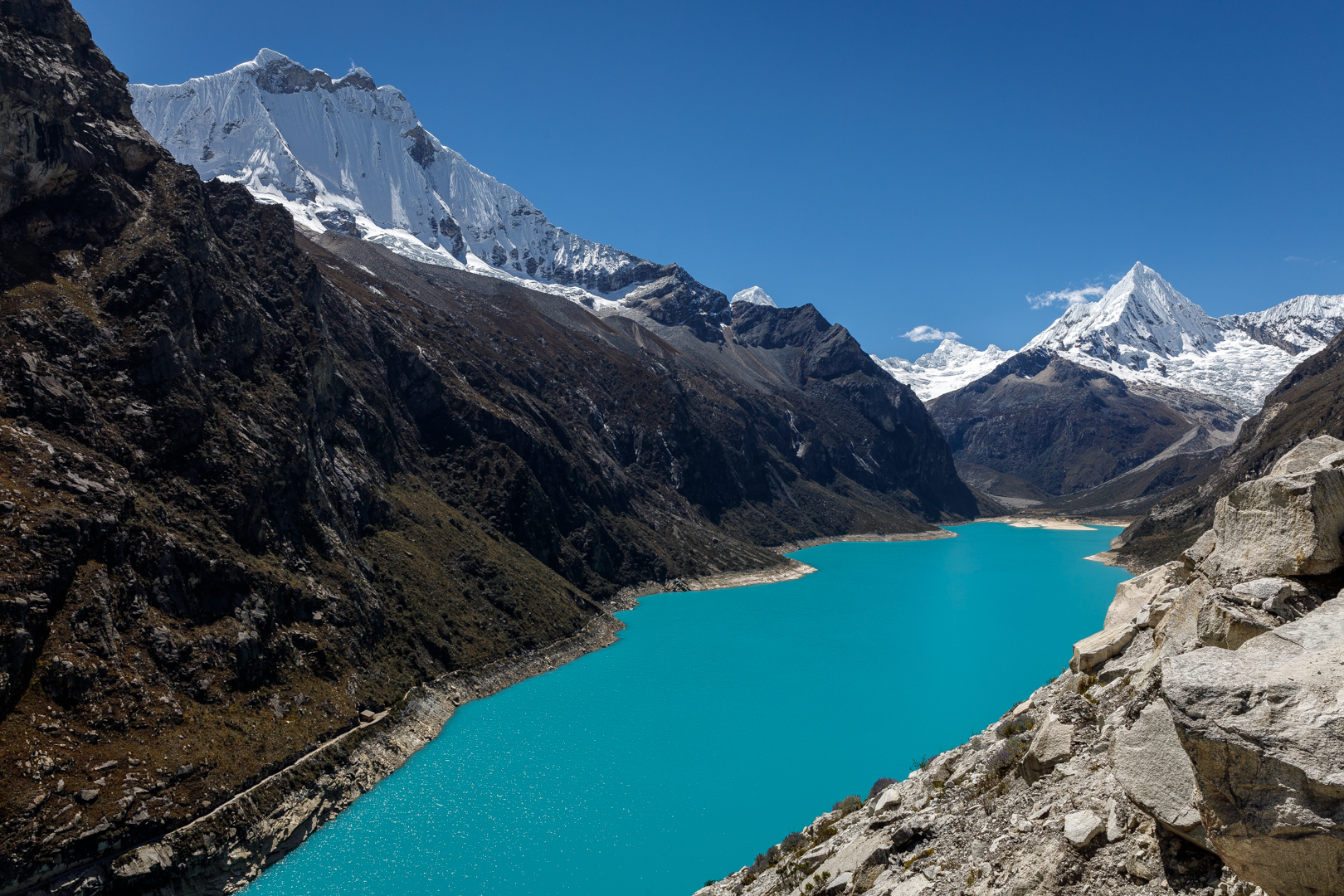
- Patococha Lagoon: a beautiful body of water at the foot of the glacier. Its calm surface reflects the surrounding mountains.
- Puya Raimondi: along the route, travelers pass through stands of Puya Raimondi (Puya raimondii), the world’s largest member of the bromeliad family. It can grow over 12 meters tall and blooms only once in its lifetime (between 40 and 100 years), producing up to 20,000 flowers before it dies. Seeing a field of blooming puyas is one of Peru’s most unique natural spectacles.
- Pumapampa Spring: also known as the “Fountain of Youth”, this is a lightly carbonated natural spring that bubbles up from the ground. The water has a distinctive mineral flavor, and locals attribute revitalizing properties to it.
- Rock paintings: at certain points along the route, traces of rock art left by pre-Inca peoples can be seen.
The Ascent to the Glacier
The final section up to the glacier is done on foot from a parking area. The hike is approximately 2 kilometers with a moderate incline at an altitude that exceeds 5,000 meters. At that height, the air is noticeably thinner and the cold can be intense even on sunny days.
Upon reaching the glacier, visitors can walk on the ice and, on clear days, enjoy a panoramic view of the entire Cordillera Blanca. It is important to stay within the designated areas to avoid damaging the glacier or risking accidents from crevasses in the ice.
Recommendations
- Acclimatization is essential: it is recommended to spend at least 2 days in Huaraz (3,090 m) before ascending to Pastoruri.
- Dress in warm layers and bring gloves and a hat. Temperatures at the glacier can drop below zero even at midday.
- Not recommended for people with serious cardiac or respiratory conditions.
- Most tours depart from Huaraz and include transportation, a guide, and stops at points of interest along the way.
- Stay well hydrated: cold and altitude accelerate dehydration.
Hours
- Depends on the operator
Admission Price
- Depends on the operator