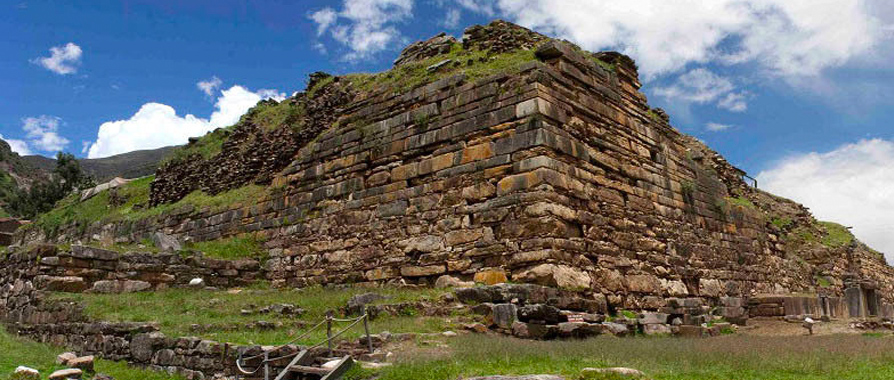
The Chavín de Huántar archaeological site is located in the province of Huari in the Ancash region. It flourished between 1500 and 550 BC.
The Chavín de Huántar archaeological site is located in the province of Huari in the Áncash region, 462 km northeast of Lima and 110 km from Huaraz. It flourished between 1500 and 550 BC and served as an important ritual and religious center that drew people from different parts of the Andean world to worship the deities believed to reside there.
Chavín de Huántar was declared a UNESCO World Heritage Site in 1985 and is considered one of the most important archaeological sites in pre-Columbian America.
The Chavín Culture
The Chavín Culture was one of the earliest great civilizations in Peru and flourished during what is known as the Andean Formative Period. Unlike other cultures that arose before and after it, Chavín was defined not by military power but by its religious and artistic influence. Its symbols, styles, and iconographic motifs spread across much of the Andean territory, from the northern coast to the southern highlands, making it what archaeologists call a “cultural horizon.”
The complex of Chavín de Huántar was the primary pilgrimage center of the Andean world for centuries. At the height of its splendor, pilgrims are estimated to have traveled hundreds of kilometers to participate in rituals that combined the ingestion of hallucinogenic plants (the San Pedro cactus), the music of conch shell trumpets, and initiation rites held in the dark galleries of the temple.
The Architecture: Terraces and Plazas
The Chavín site is composed of massive stone-block buildings constructed in terraces around square and circular plazas. The oldest building, known as the Old Temple, dates to around 1200 BC and was expanded with the New Temple around 900 BC.
The Sunken Circular Plaza, located in front of the New Temple, was one of the most important sacred spaces. Pilgrims gathered here before entering the temple. The walls of the plaza were once decorated with the famous tenon heads — sculptural stone blocks shaped like human heads with feline and serpentine features representing the guardians of the temple. Originally there were more than 200; today only one remains in situ.
The Internal Galleries
The most fascinating feature of Chavín is its complex system of internal galleries and underground passageways that extend through all levels of the building. These galleries were built with extraordinary technique: the stone walls are perfectly fitted without mortar, and the ceilings are composed of flat stone slabs forming corbelled vaults.
The corridors are narrow (barely wide enough for one person) and almost completely dark. Only carefully directed shafts of light channeled through stone tubes illuminate certain strategic points. This design was deliberate: the darkness, amplified sounds, and hallucinogenic plants created a sensory experience of spiritual transformation for initiates.
The Lanzón Monolith
At the geometric center of the Old Temple, in a gallery specially designed for it, stands the Lanzón Monolith: a carved stone 4.53 meters tall representing the principal deity of the Chavín pantheon. The figure combines human features with elements of jaguar, serpent, and condor — the three sacred animals of the three dimensions of the Andean cosmos (earth, underworld, and sky).
The Lanzón is one of the most important monuments in Peruvian archaeology and a masterful example of Chavín art: detailed, symbolic, and filled with religious meaning.
Visitor Recommendations
- Access to the galleries is limited and must be done in small groups with a mandatory guide.
- The internal galleries are cool: bring a light layer even if the day feels warm.
- A visit to the site pairs perfectly with the Chavín National Museum, opened in 2008, which displays tenon heads, stelas, and other objects recovered from the site.
- The site is at 3,177 meters above sea level; acclimatization in Huaraz beforehand is recommended.
How to Get There
Lima – Áncash
Flight: approx. 1 hour
Huaraz – Chavín de Huántar
Bus: approx. 3 hours
Location: Jr. 17 de enero, north of the main plaza
Hours
Tuesday - Sunday
- 9:00 AM to 4:00 PM
- Approximate schedule
Admission Price
Tuesday - Sunday
- General S/15 soles
- Approximate price