The Monastery of Santa Catalina de Siena, also called the Convent of Santa Catalina, is a religious tourism complex located in Arequipa.
The Monastery of Santa Catalina de Siena, also known as the Convent of Santa Catalina, is a religious tourism complex located in Arequipa.
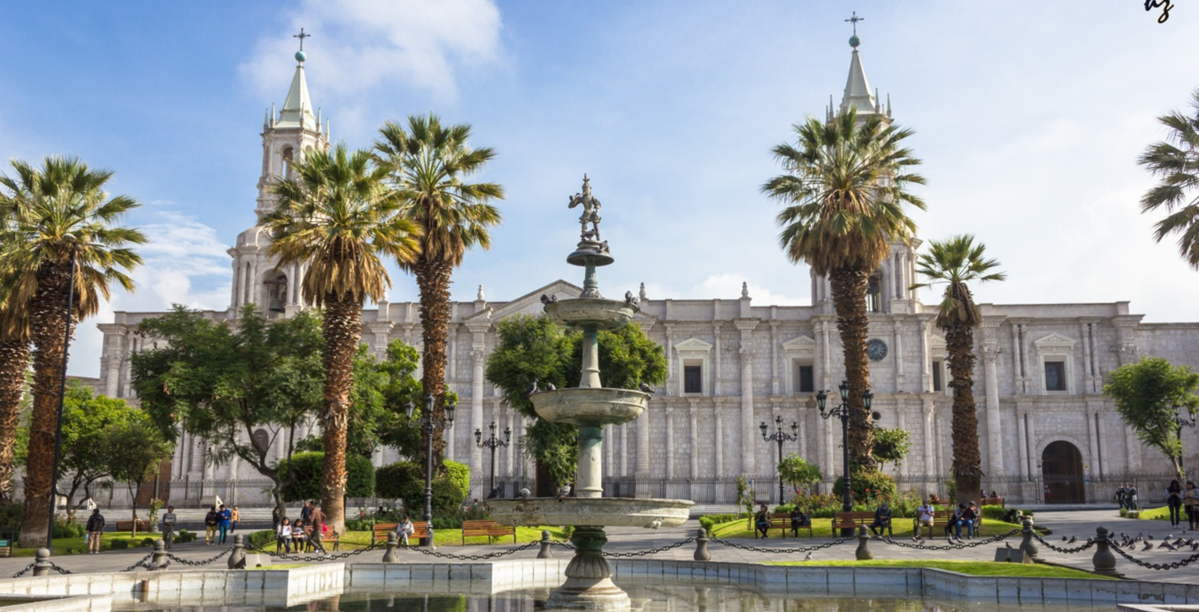
Just a few minutes from Arequipa’s Plaza de Armas lies the Santa Catalina Monastery — an enigmatic place that astonishes visitors not only with its colorful colonial architecture, but also with the secrets it has kept hidden behind its walls for several centuries.
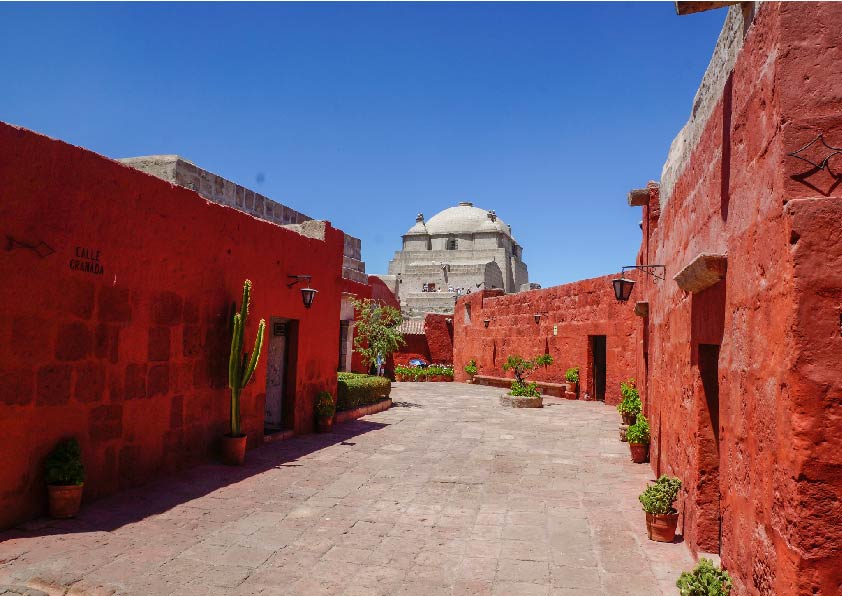
Santa Catalina de Siena was the saint who inspired this monastery, whose walls are painted in vivid colors and whose beautiful main square blends with cobblestone passages in an atmosphere of silence. A community of women dedicated to prayer, charity, and the creation of the most delicious sweets imaginable; more than a monastery, Santa Catalina is a crucible of secrets that the visitor can only begin to glimpse through its walls.
History of the Monastery
The Santa Catalina Monastery was founded in 1580 by doña María de Guzmán, a widowed noblewoman who donated her lands and possessions to create a religious space for cloistered Dominican nuns. During the 17th and 18th centuries it was one of the most powerful and wealthy convents in South America, at one point housing more than 150 nuns and 300 servants.
Most remarkably, the monastery operated in complete enclosure for nearly 400 years and was not opened to the public until 1970. Throughout that time, the nuns who lived inside never left, and the outside world could only communicate with them through a small rotating window.
A City Within a City
What makes Santa Catalina truly unique is that it is not simply a convent — it is literally a small city within Arequipa. It covers more than 20,000 square meters and has streets, plazas, fountains, communal kitchens, a laundry, and dozens of cells. Each nun from a noble family had her own room decorated with furniture brought from Spain and paintings from the Cusco school.
The monastery’s streets bear the names of Spanish cities: Calle Sevilla, Calle Granada, Calle Córdoba. Walking through them is a journey back several centuries in time, along walls painted blood red, indigo blue, and ochre orange that contrast with the white sillar so characteristic of Arequipa.
What to See Inside the Monastery
- Calle Sevilla: one of the most photogenic streets, with pots of geraniums hanging from terracotta-colored walls.
- Plaza Zocodover: the nerve center of the monastery, where the nuns gathered.
- The communal kitchens: with enormous pots and 17th-century utensils still on display.
- The painting gallery: works from the Cusco school depicting biblical passages in a unique mestizo style.
- The noble nuns’ cells: some decorated with personal objects and original furniture.
- The cell of Sor Ana de los Ángeles: a nun who lived here in the 17th century, beatified by Pope John Paul II in 1985 during his visit to Peru.
Visitor Tips
- Allow at least 2 hours to explore the monastery at a comfortable pace.
- Admission includes an audio guide service in several languages.
- Special evening tours are offered on Thursdays and Fridays with dramatic lighting, and are very popular.
- The shop at the end sells sweets and products made by the nuns who still live in cloistered enclosure in a private section of the convent.
- Arriving early is recommended to avoid large tour groups.
How to Get There
Arequipa Historic Center – Santa Catalina Monastery
Bus: approx. 5 minutes
Hours
- 9:00 AM to 5:00 PM
- Approximate schedule
Admission Price
- S/40 to S/45 soles
- Approximate price