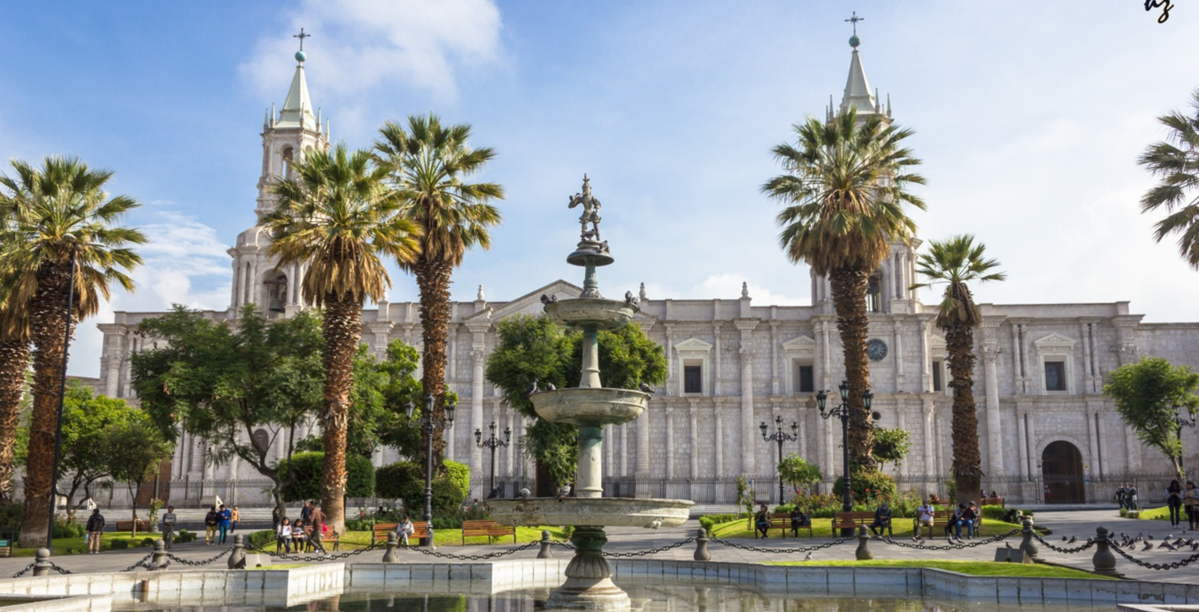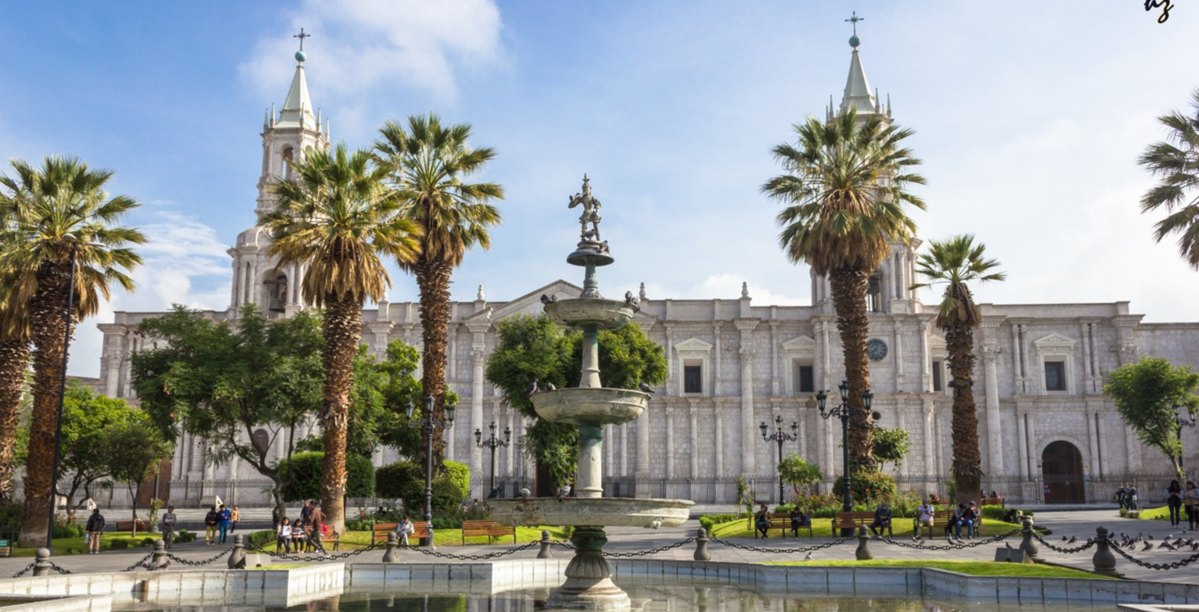
The plaza is one of the public spaces of Arequipa and the founding site of the city in 1540, on August 15, by García Manuel de Carbajal.
The Plaza de Armas is one of the most important public spaces in Arequipa and the founding site of the city, established on August 15, 1540 by García Manuel de Carbajal.
It is one of the most iconic landmarks of the famous White City. The plaza has a regular square shape and an imposing urban scale that sets it apart from other colonial plazas in Peru. Its unique character stems from both its architecture and the buildings that surround it, all constructed in the characteristic white sillar — the volcanic rock quarried from the slopes of Misti.
History of the Plaza
The history of Arequipa’s Plaza de Armas is intimately linked to the history of the city and of Peru itself. From its founding, the plaza was the center of social, religious, and political life in Arequipa. Independence was proclaimed here, and the square hosted bullfights, military parades, and religious festivals.
During the colonial period, the plaza housed the city’s main market, where goods from the highlands, coast, and jungle were exchanged. Over time, the market was relocated and the plaza was transformed into the civic and religious gathering space it is today.
Throughout its history, the plaza and the buildings surrounding it have endured the effects of numerous earthquakes and volcanic eruptions, but they have always been rebuilt using the same white sillar, giving the space an exceptional architectural coherence.
The Cathedral Basilica
The most imposing building on the plaza is undoubtedly the Arequipa Cathedral Basilica, which occupies the entire northern side. With a façade stretching more than 100 meters wide and towers 44 meters tall, it is one of the largest cathedrals in South America.
The cathedral was built in several stages between the 17th and 19th centuries, suffering damage from earthquakes and fires that required its reconstruction on various occasions. It was elevated to Minor Basilica by Pope Pius XII in 1940. Its interior preserves important pieces of colonial art and 19th-century wooden choir stalls considered a masterwork of Arequipa craftsmanship.
The Central Fountain and the Arcades
At the center of the plaza stands a beautiful colonial bronze fountain surrounded by well-tended gardens with colorful flowers. The fountain is one of Arequipa’s most photographed elements and a regular meeting point for locals and tourists alike.
The four sides of the plaza are bordered by elegant arcaded portals following the model of Spanish colonial plazas. Beneath these arcades, restaurants, cafés, jewelry shops, and handicraft stores operate. The Portal de San Agustín and the Portal de Flores are especially lively throughout the day and into the evening.
Corpus Christi and Other Festivals
Every year, in May or June, Arequipa’s Plaza de Armas is transformed for the celebration of Corpus Christi, one of the most important religious festivals in the city. During this celebration, the plaza is decorated with elaborate carpets of fresh flowers arranged in geometric and religious patterns of great beauty. The procession of the Blessed Sacrament winds through the arcades surrounded by thousands of devotees.
Other important festivals that take place on the plaza include the Fiestas Patrias on July 28, the Festival of the Virgen de la Candelaria, and Arequipa’s anniversary on August 15.
At Night
Arequipa’s Plaza de Armas is spectacular at night. The cathedral and surrounding buildings are bathed in golden light that enhances the white of the sillar. The cafés and restaurants beneath the arcades come alive, and live music is often heard. It is the ideal place to begin or end an evening in Arequipa.
How to Get There
Arequipa Airport – Plaza de Armas
Bus: approx. 40 minutes
Hours
- Open access 24 hours
- The Cathedral: 10:00 AM to 5:00 PM (approximate)
Admission Price
- The plaza has free access
- The Cathedral: S/10.00 soles (approximate)