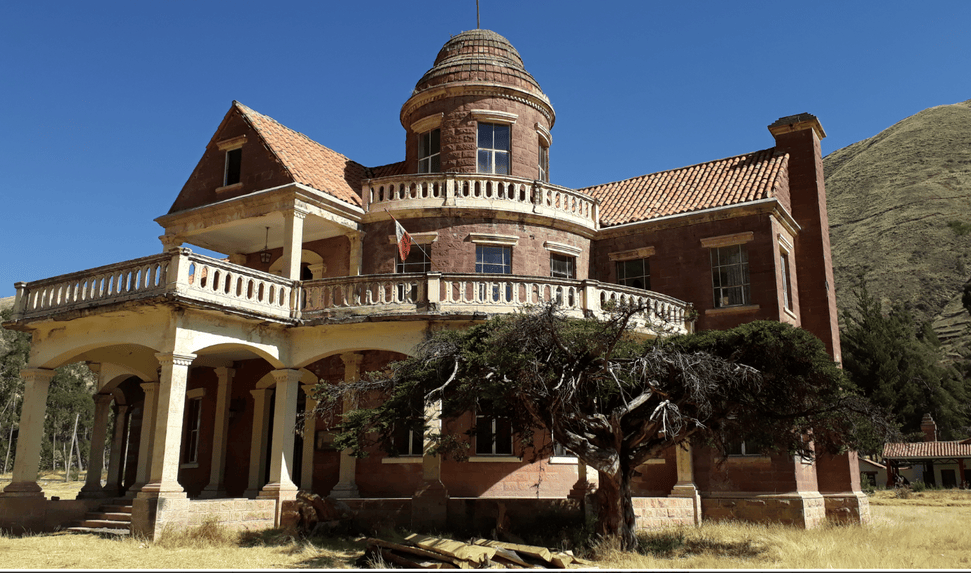
Casa de Piedra of Marangani is a one-of-a-kind French Baroque mansion standing at 3,641 m.a.s.l. in the Vilcanota Valley, Canchis province, Cusco.
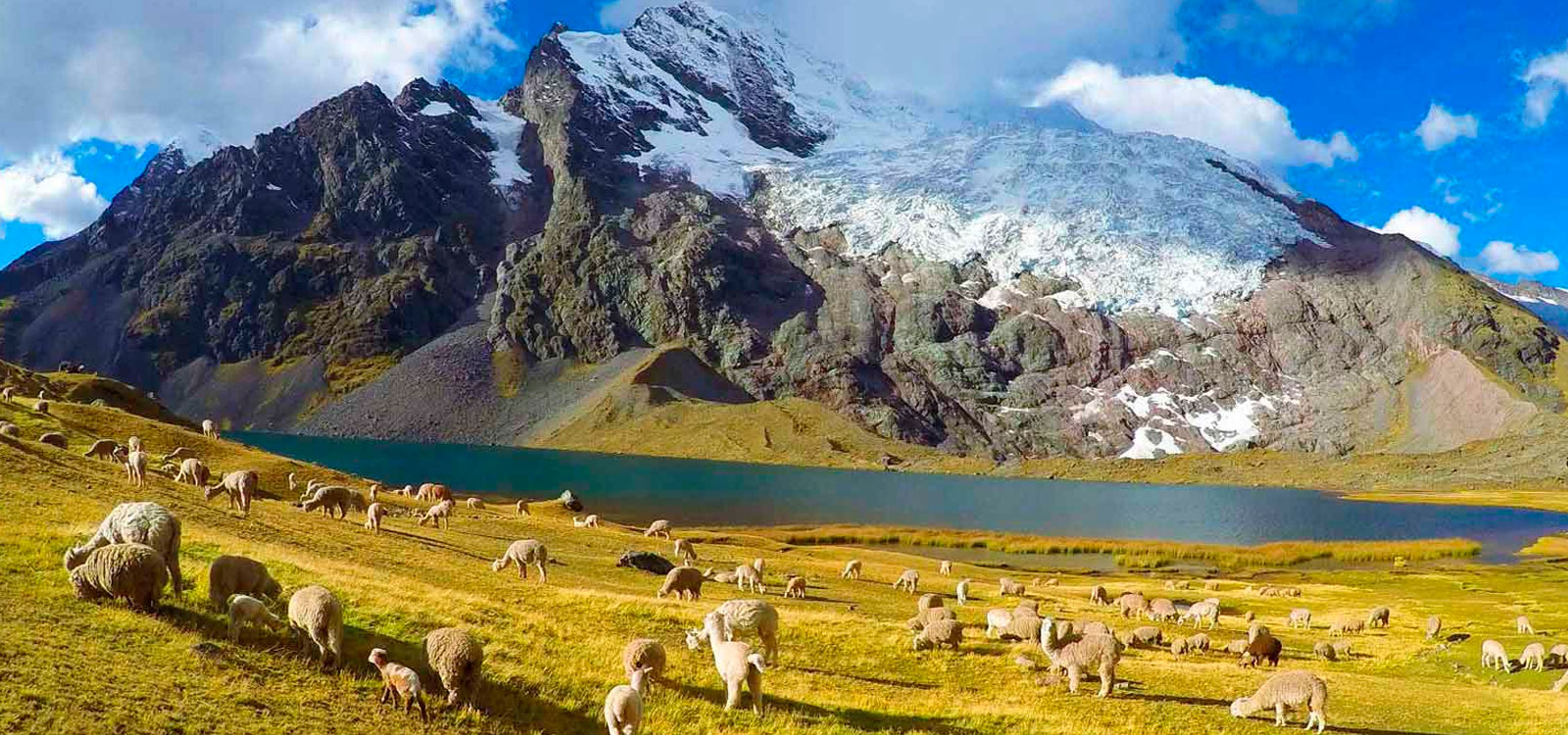
High in the Andean altiplano of southern Peru, where the Vilcanota River carves its way through a landscape of golden grasslands and snow-capped summits, stands one of the most unexpected buildings you will ever encounter in the Cusco highlands. The Casa de Piedra of Marangani — literally “the Stone House” — is a two-story mansion built in the French Baroque style at an altitude of 3,641 meters above sea level, sitting inside the rural community of Chectuyoc in the district of Marangani, Canchis province. Nothing quite prepares you for the sight of it: an ornate stone façade straight out of eighteenth-century Paris, rising amid Andean pastures with the open blue sky as its only backdrop.
What makes the Casa de Piedra of Marangani extraordinary is not just its architecture, but its story — a tale of industrial ambition, family legacy, and a determination to finish what a father began. This is the only construction of its kind in the entire province of Canchis, and it draws visitors who want to go beyond the standard Cusco circuit and experience something genuinely singular. The Chectuyoc rural community, which has managed and maintained the property since 1988, keeps the building in good condition and welcomes travelers who plan their visit in advance.
History of Casa de Piedra of Marangani
To understand why this mansion exists in the middle of the Andean highlands, you have to go back to the turn of the twentieth century and the Mejía family. In 1895, Pablo P. Mejía founded a textile factory in Marangani that became one of the first industrial weaving mills in the Cusco region. That enterprise made the Mejía family the most prominent household in the district and gave them the economic means to dream on a grand scale.
By 1940, the family patriarch had decided to build a residence worthy of his standing. On January 2 of that year, construction began. For the exterior design, he commissioned a French architect whose plans drew directly from the Royal Palace of France, while the interior spaces were to follow the Spanish colonial tradition. Local stonecutters set to work shaping the hard rock of the highlands into arched windows, decorative cornices, and thick load-bearing walls. Craftsmen assembled a traditional “tijereta” (scissor-truss) roof frame out of pine wood, covered it with terracotta tiles, and finished the ceiling inside with plaster. A colonial dome was raised to crown the structure and give it a silhouette unlike anything else for miles around.
The construction stretched on, and in September 1943 — before the project was complete — the patriarch died. He had poured three years of work and an enormous fortune into the building, and he never saw it finished. His three sons, Pablo Edgardo, Mario Concepción, and Enrique Eugenio Mejía, took on the responsibility of carrying the project through to the end. They honored their father’s vision in every detail, and on October 17, 1949, nearly a decade after the first stone was laid, the mansion was officially inaugurated.
The house remained in the Mejía family’s hands for several decades before the Chectuyoc rural community took over its ownership and administration in 1988. Since then, it is the community members themselves who have ensured the building survives: patching walls, maintaining the roof, and receiving the visitors who make their way to this remote corner of the Vilcanota Valley.
Where Two Continents Meet in Stone
Standing in front of the Casa de Piedra of Marangani for the first time, most visitors experience a kind of double-take. The scale of the building is impressive — roughly 500 square meters of floor area, six meters high, spread across two full floors — but it is the stylistic dissonance that stops you in your tracks. Baroque stonework that belongs in Lyon or Versailles, set against a backdrop of ichu grass, high-altitude sky, and distant Andean ridgelines.
The ground floor was designed for daily life at the estate’s peak: a wide reception room opens to a dining room connected to the kitchen, and seven bedrooms branch off from the central corridor. The colonial staircase that links the two floors is one of the building’s finest surviving details — its proportions and craftsmanship speak to the skill of the builders who shaped it by hand more than eighty years ago.
Upstairs, eight bedrooms each contain traditional wood-burning stoves, a practical response to the freezing nights at over 3,600 meters. The bathrooms on this floor include a colonial-era jacuzzi — an almost surreal feature for a rural Andean building of its time — and the French-style balcony looks out over the Vilcanota Valley, framing a view of patchwork agricultural fields, the river glinting below, and the mountains stacked on the horizon. On a clear morning, that balcony view alone justifies the journey.
The colonial dome above the roofline completes the picture. From a distance, it gives the Casa de Piedra a silhouette unlike any other rural building in Canchis, making it visible well before you reach the community of Chectuyoc and signaling that something unusual awaits.
Highlights of Casa de Piedra of Marangani
-
French Baroque façade: The main front of the building is its most arresting feature. Carved stone, arched openings, and ornamental detailing reference the grandeur of French royal architecture, brought here by a foreign architect at the Mejía family’s request.
-
Colonial staircase: The stairwell connecting the two floors has survived intact since the mansion’s inauguration in 1949. Its craftsmanship and proportions offer a tangible link to the building’s origin.
-
French-style balcony: The second-floor balcony delivers an unobstructed view across the Vilcanota Valley — fields, mountains, and the river below — that ranks among the most rewarding panoramas on this stretch of the Andean valley.
-
Colonial dome: Rare in any rural Andean building, the dome that tops the structure gives the Casa de Piedra its distinctive profile and marks it as something apart from every other construction in the province.
-
Traditional stove-heated bedrooms: Each of the eight upper-floor bedrooms preserves its original wood-burning stove, an authentic detail that speaks to highland life in the mid-twentieth century.
-
Chectuyoc community: The Casa de Piedra does not exist in isolation. The surrounding rural community is an active, living part of the experience — hand-woven textiles, agricultural rhythms, and a collective pride in maintaining something that the broader outside world has only recently begun to discover.
Tips for Visiting Casa de Piedra of Marangani
-
Best months: May through October is the dry season in southern Cusco, offering clear skies, better road conditions, and the most favorable light for photographing the façade. The rainy season (November to April) is not a barrier to visiting, but check road conditions before you travel.
-
Coordinate in advance: Access is semi-restricted. You must contact the president of the Chectuyoc rural community, Emilio Alvares Ponce (phone: 977 146 339), before your trip to confirm availability and opening times. Arriving without prior arrangement may mean a closed door.
-
Dress for altitude: At 3,641 meters, temperatures drop faster than expected, especially with cloud cover or in the afternoon. Bring a warm jacket or fleece even if the morning feels mild.
-
Arrive before midday: Morning light between 9 and 11 a.m. is ideal for capturing the façade without harsh shadows from the high-altitude sun. Midday light tends to flatten the stone detail.
-
Acclimatize first: If you are traveling from Lima or from sea level, spend at least one night in Cusco before attempting this trip. Altitude sickness (soroche) at 3,641 meters is a real risk for unacclimatized travelers, and it will ruin the experience.
-
Stay in Sicuani: The city of Sicuani, just 8 km from Marangani, offers two- and three-star hotels, restaurants, ATMs, and travel agencies. It is the most practical base for exploring this part of Canchis province.
-
Combine the visit: The Vilcanota Valley has other worthwhile stops nearby, including the colonial church of Checacupe and the La Raya thermal baths, making it easy to build a full-day itinerary in the area.
-
Photography notes: A wide-angle lens captures the full two-story façade against the sky. The balcony and the dome both reward close-up details shots, while the surrounding grasslands and mountains provide natural framing for wide establishing images.
How to Get to Casa de Piedra of Marangani
Lima – Cusco
The most efficient way to begin this journey is by flying from Lima to Cusco. Flights take between 1 hour 15 minutes and 1 hour 30 minutes, and there are multiple daily departures. Overland bus service from Lima is also available, covering roughly 1,100 km in around 20 to 22 hours — a slower option that suits travelers who enjoy watching the landscape change.
Cusco – Sicuani
From Cusco’s bus terminal, regular buses and shared vans (combis) run south toward Sicuani throughout the day. The fully paved route covers 138.9 km and takes approximately 3 hours. The drive itself traces the Vilcanota River upstream, through a succession of Andean towns and open valley landscapes that grow more remote and dramatic as you head south.
Sicuani – Casa de Piedra of Marangani
From Sicuani, local transport options — mototaxi, combi, or taxi — cover the 8 km to Marangani in about 10 minutes on a paved road. Once in Marangani, the Casa de Piedra is just 100 meters from the main bus stop on a paved path, making the final approach straightforward even for those traveling independently.
Frequently Asked Questions about Casa de Piedra of Marangani
How much time do you need to visit Casa de Piedra of Marangani?
A thorough visit to the mansion — touring both floors, stepping onto the balcony, and walking through the surrounding community of Chectuyoc — takes between one and two hours. If you plan to combine the stop with a walk around Marangani town and a meal in Sicuani, block out a full half-day or even a complete day from Cusco.
Can you visit Casa de Piedra of Marangani year-round?
Yes, the site is open to visitors throughout the year. The dry season from May to October offers the most comfortable conditions, with reliable sunshine and accessible roads. During the wet season (November to April), rain can affect secondary tracks, but the paved road from Cusco to Marangani remains in good condition. The key requirement in any season is to coordinate your visit in advance, as access is semi-restricted.
How much does entry to Casa de Piedra of Marangani cost?
There is no publicly available official price list for the entrance fee. Contact the Marangani District Municipality or the Chectuyoc community president directly before your trip to confirm the current rate (Approximate).
How difficult is it to reach Casa de Piedra of Marangani?
The physical logistics are straightforward: the entire route from Cusco to Marangani is paved, and the walk from the bus stop to the mansion is only 100 meters. The main challenge is altitude — at 3,641 meters, travelers arriving from sea level without acclimatization are likely to experience some degree of altitude sickness. Spending a night in Cusco first, staying well hydrated, and avoiding overexertion on arrival day are all effective precautions.
Are there tourist services near Casa de Piedra of Marangani?
Inside the site, the Chectuyoc community operates food and beverage kiosks and a ticket booth. For a wider range of services — hotels, restaurants, banks, pharmacies, and travel agencies — the city of Sicuani, 8 km away, provides everything a traveler needs. Sicuani is a well-established provincial capital and a comfortable base for exploring this part of the Cusco highlands.
Opening Hours
- 6:00 a.m. – 6:00 p.m.
- Approximate
Entrance Fee
- Consult directly with the Chectuyoc Rural Community or Marangani District Municipality
- Approximate