The Palomino Islands in Callao are home to the largest sea lion colony in the Peruvian Pacific, with tours that allow you to swim alongside them in the open ocean.
The Palomino Islands are located just 6 nautical miles from the port of Callao, off the coast of Lima, Peru. This archipelago, made up of four small islets — Palomino, El Frontón, San Lorenzo, and El Camotal — has become a must-visit stop for marine wildlife lovers and travelers seeking unique experiences just a few kilometers from the Peruvian capital.
The main island, Palomino, is home to the largest sea lion colony in Callao and is the focal point of the most popular tour in the area.
History of the Islands
The islands off the coast of Callao have a long history. San Lorenzo, the largest of the archipelago, was inhabited in pre-Columbian times and served during the colonial era as a quarantine site for ships arriving at the port of Lima. In the 20th century, El Frontón island housed a high-security prison that became the scene of a violent massacre during the government of Alan García in 1986, when riots by Sendero Luminoso prisoners were suppressed with bombs dropped from helicopters.
Today the islands are primarily known for their natural richness and the National Reserve System of Guano Islands, Islets, and Capes, which protects the marine ecosystem along the entire Peruvian coast.
Sea Lions: The Main Attraction
The main attraction of the Palomino Islands is the impressive sea lion colony (Otaria flavescens), also known as South American sea lions. Hundreds of these animals rest on the rocks, bask in the sun, and plunge into the water in displays of marine acrobatics that delight visitors.
Adult sea lions can weigh up to 300 kilograms and produce an unmistakable roar that can be heard from a distance. The dominant males are easily recognizable by their size and dark mane, and display territorial behavior. Females and pups are more docile and curious toward visitors.
Some excursions offer the possibility of swimming with the sea lions within the permitted zone, always accompanied by specialist guides. This is one of the most thrilling experiences available on the Peruvian coast: the sea lions approach out of curiosity, circle the swimmers, and sometimes swim alongside them with extraordinary grace.
Seabirds: The Spectacle of Guano
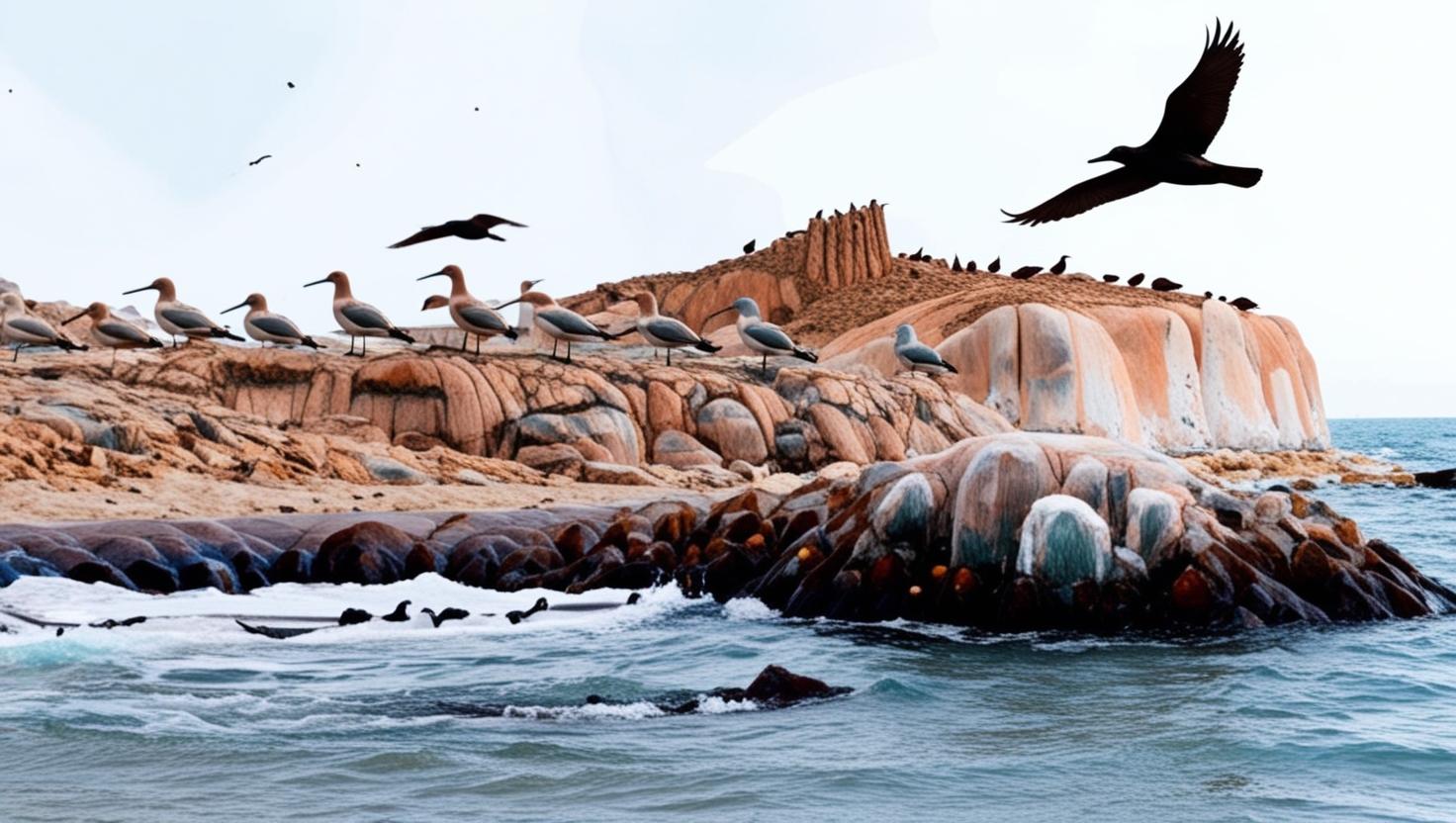
The islands are also one of the most important sites in Peru for seabird watching. The Humboldt Current, which runs along the Peruvian coast carrying cold, nutrient-rich waters, sustains a marine biomass that feeds millions of birds.
Among the species that can be observed at the Palomino Islands:
- Peruvian boobies (Sula variegata): large birds that hunt in spectacular vertical plunges from height.
- Guanay cormorants (Phalacrocorax bougainvillii): the quintessential guano bird, forming the world’s largest seabird colonies.
- Peruvian pelicans (Pelecanus thagus): the world’s largest pelicans.
- Inca terns and Peruvian terns: small birds that skim the water’s surface.
- Surf scoters and marine ducks: common on the rocks of the islands.
The Peruvian guano industry, which made Peru one of the wealthiest countries in the world in the 19th century, was based precisely on the extraction of guano accumulated by these birds over centuries on the coastal islands.
La Catedral and the Historic Lighthouse
Another highlight is the water passage known as “La Catedral” (The Cathedral), a natural rock formation that creates an imposing arch that the boat can sail through. This geological formation takes its name from the majestic appearance of its rock walls, which evoke the vaulted ceilings of a Gothic cathedral.
At the summit of one of the islands, the old lighthouse that once guided ships and steamers through Pacific waters stands as a witness to time. The lighthouses of the islands off Callao were essential to navigation during the 19th and 20th centuries, when the port of Callao was one of the busiest in South America.
How to Organize the Visit
- Excursions to the Palomino Islands generally depart from the La Punta pier in Callao, with authorized local tour operators.
- The boat trip takes approximately 30–45 minutes.
- Bring a jacket: the sea off Lima can be windy even in summer.
- The best time to visit is between November and March (austral summer) when the sea is calmest.
- If you want to swim with the sea lions, make sure to book with an operator that offers this activity and provides a wetsuit, as the Humboldt Current water is cold.
Hours
- Depends on the type of visit and tour operator
- It is recommended to check directly at the site or with local agencies
Admission Price
- Varies by operator and tour type
- It is recommended to verify current prices before visiting