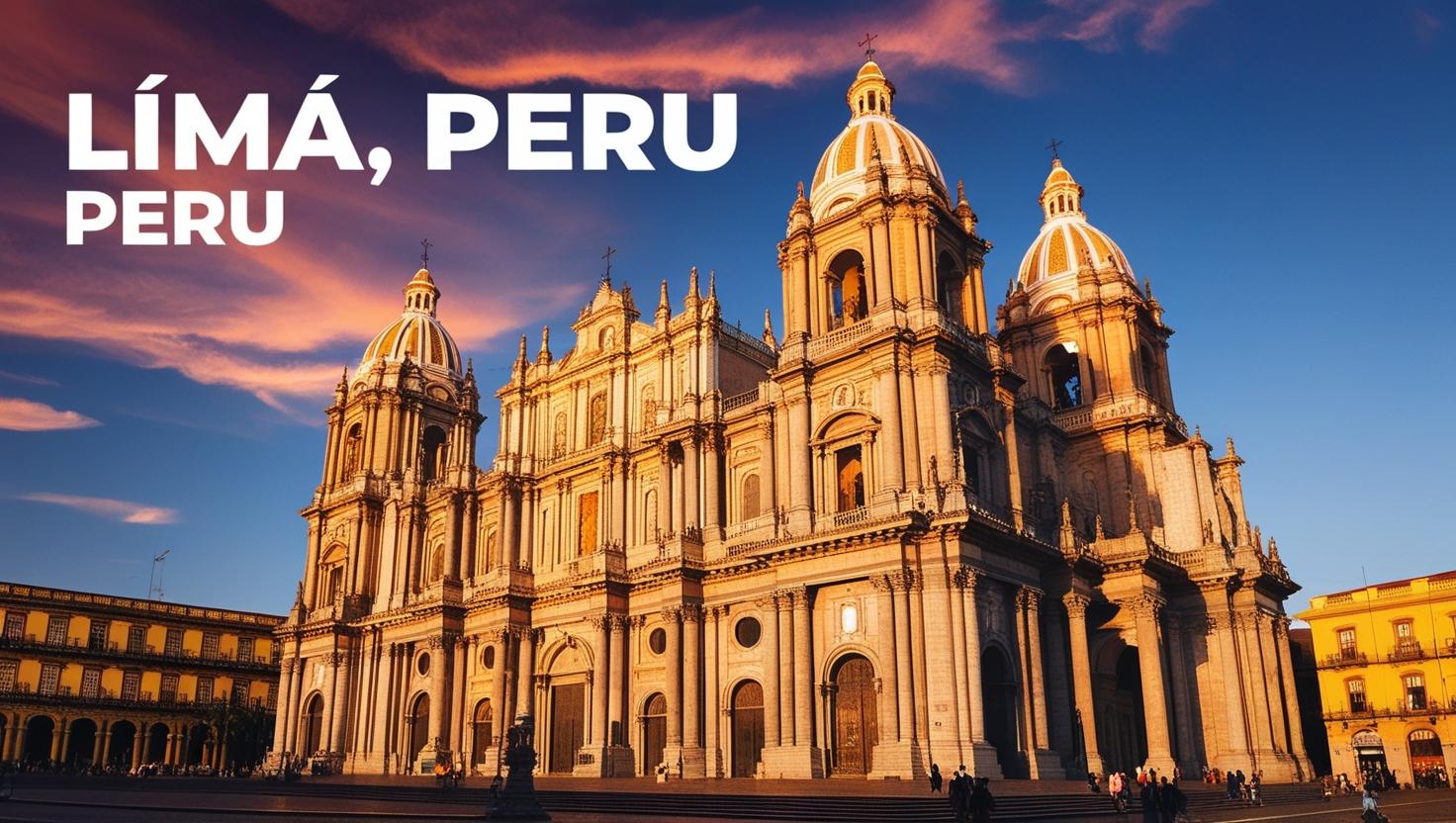
The Archbishop's Palace on Lima's Plaza Mayor is a jewel of colonial neoplateresque architecture, featuring its celebrated carved cedar balcony and a valuable collection of religious art.
The Archbishop’s Palace of Lima stands as one of the most distinguished buildings on the historic Plaza Mayor, in the heart of Lima’s colonial district. Inaugurated on December 8, 1924, this architectural masterpiece represents the neocolonial style at its finest and houses the seat of the Roman Catholic Archdiocese of Lima. Its elaborate facades, exquisitely carved cedar balconies, and rich collection of religious art make it an essential stop for anyone exploring the Peruvian capital’s historic center.
History and Origins
The origins of the Archbishop’s Palace date back to 1535, when Francisco Pizarro assigned this site to the Church following the founding of Lima. The current building, however, is the result of a major reconstruction carried out in the early 20th century. Polish architect Ricardo de Jaxa Malachowski was commissioned to design the new structure, creating what is considered the first significant example of neocolonial architecture in Lima.
The building was inaugurated on December 8, 1924, coinciding with the feast of the Immaculate Conception — a date of great symbolic significance for the Catholic Church. Since then, it has served as the official residence and administrative headquarters of the Archbishop of Lima.
Architectural Features
The Neoplateresque Facade
The palace’s facade is a stunning example of the neoplateresque style, which draws inspiration from the Spanish Plateresque tradition while incorporating colonial Peruvian elements. The intricate stonework, ornamental details, and harmonious proportions create a visual impact that draws the eye the moment one enters the Plaza Mayor.
The Carved Cedar Balconies
Perhaps the most celebrated feature of the Archbishop’s Palace is its series of carved cedar balconies, which run along the length of the facade overlooking the plaza. These balconies are masterpieces of woodworking craftsmanship, featuring elaborate geometric and floral patterns worked in fine Amazonian cedar. They are widely regarded as some of the finest examples of colonial woodcarving in Lima.
The Sculpture of Santo Toribio de Mogrovejo
At the entrance to the palace stands a granite sculpture of Santo Toribio de Mogrovejo, one of Peru’s most venerated saints and a former Archbishop of Lima. The sculpture honors his legacy as a defender of indigenous rights and a tireless evangelizer who traveled the length and breadth of the Viceroyalty of Peru.
Stained Glass and Interior Spaces
The interior of the palace features beautiful French stained glass windows that filter light into the ceremonial rooms in vivid colors. The main staircase, built in the imperial style with fine marble, leads to the principal reception halls and administrative offices. The palace also houses a baroque chapel, an exquisite space for private worship and official ceremonies of the archdiocese.
The Religious Art Collection
The Archbishop’s Palace holds a significant collection of religious art accumulated over centuries of ecclesiastical life in Lima. Paintings, sculptures, liturgical objects, and historical documents form part of this heritage, which offers an extraordinary window into the spiritual and artistic history of Peru from the colonial period to the present day.
Location and How to Get There
The Archbishop’s Palace is located on the north side of the Plaza Mayor (also known as the Plaza de Armas) in Lima’s Historic Center, directly adjacent to the Lima Cathedral. The Historic Center is easily accessible by public transport and is best explored on foot.
- Metropolitano: Take the bus to the Central station and walk toward the Plaza Mayor.
- Taxi or rideshare: Ask for “Plaza Mayor de Lima” or “Plaza de Armas.”
- On foot: If you are already in the Historic Center, the palace is impossible to miss on the northern edge of the main square.
Visiting Tips
- The exterior of the palace can be admired free of charge from the Plaza Mayor at any time.
- Guided tours of the interior may be available through the Archdiocese of Lima — check in advance for current access and schedules.
- Visit in the morning for the best light on the carved balconies.
- Combine your visit with the Lima Cathedral, the Government Palace, and the Municipal Palace — all located around the same square.
Hours
- Depends on the type of visit and tour operator
- It is recommended to check directly at the site or with local agencies
Admission Price
- Varies by operator and tour type
- It is recommended to verify current prices before visiting