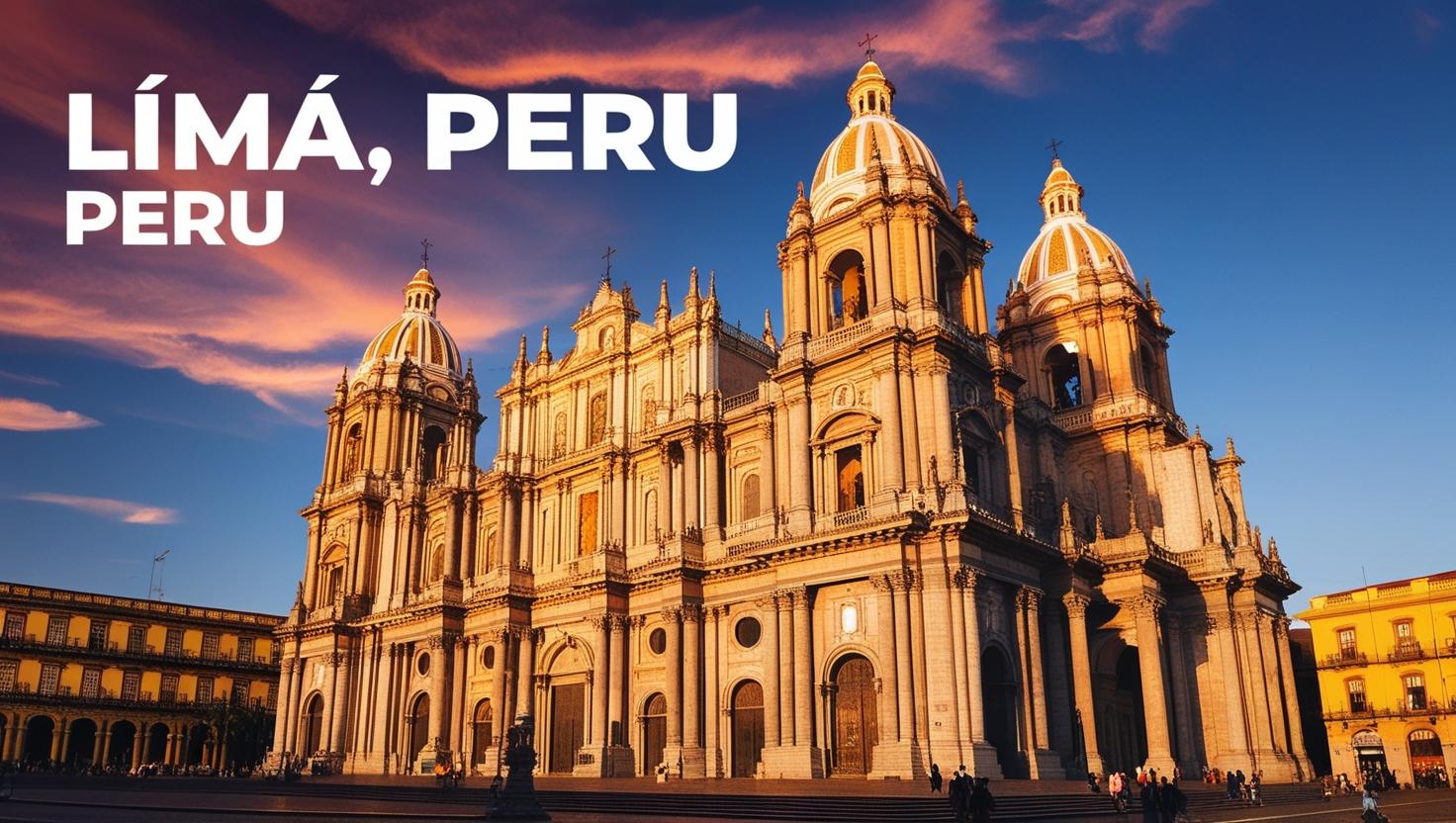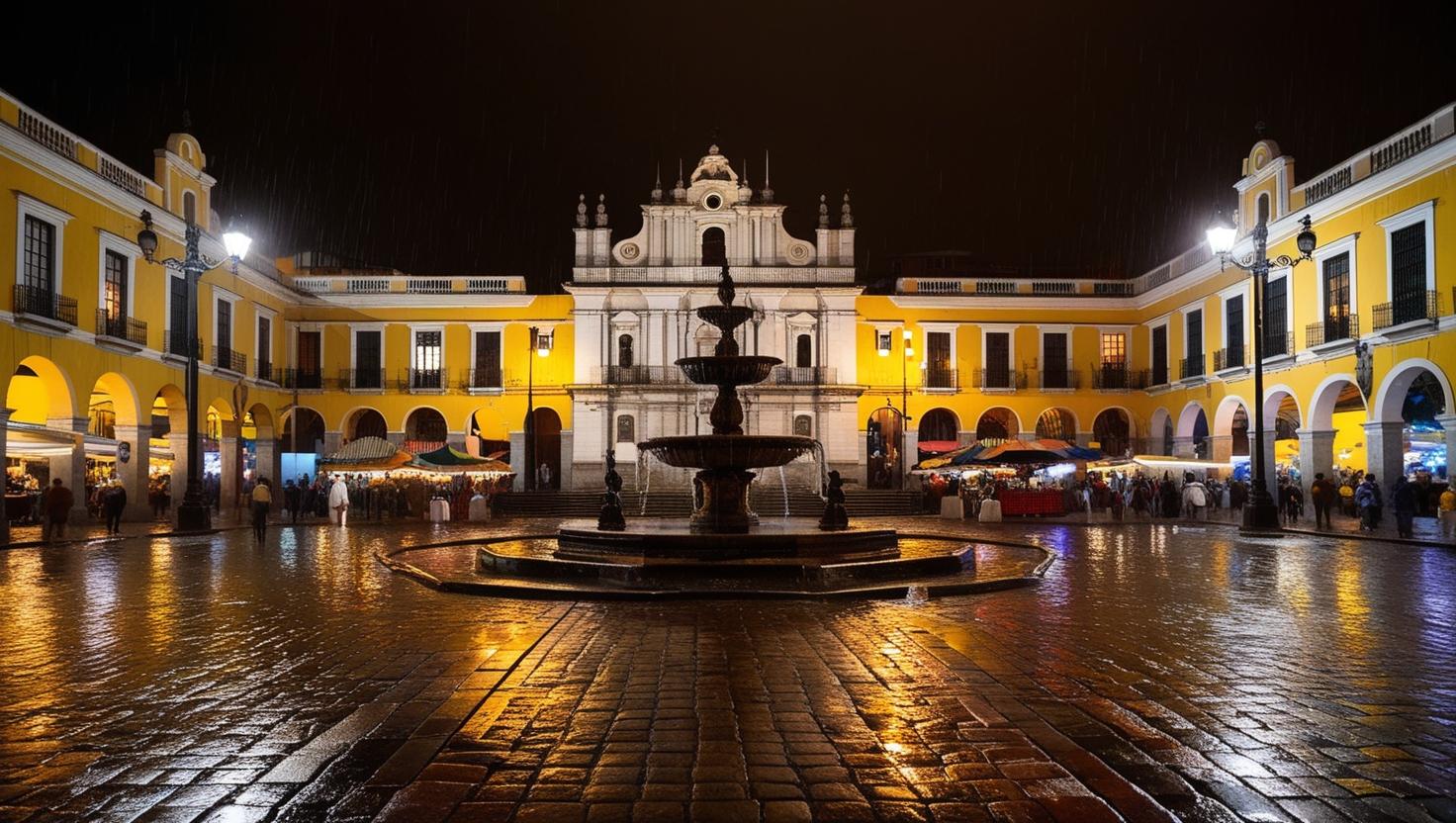
The Plaza Mayor of Lima is the historic heart of the capital, surrounded by the Government Palace, the Cathedral, the Archbishop's Palace, and the Municipal Palace, and declared a UNESCO World Heritage Site.
The Plaza de Armas of Lima — officially known as the Plaza Mayor — is the historic and symbolic heart of Peru’s capital. Founded in 1535 by Francisco Pizarro, this vast square of 12,900 square meters has been the setting for the most significant events in Peruvian history, from the proclamation of independence to presidential inaugurations. Surrounded by monumental colonial buildings and recognized as a UNESCO World Heritage Site, it is an essential destination for anyone visiting Lima.
History: Five Centuries at the Center of Peru
The Plaza Mayor was laid out in January 1535 when Francisco Pizarro traced the founding plan of the City of Kings — Lima. From the very beginning, the square was conceived as the administrative, religious, and social center of the new colonial capital. The institutions that would govern Peru for centuries were established around its perimeter: the Cathedral, the Archbishop’s Palace, the Cabildo (town hall), and the Government House.
Over the centuries, the square witnessed some of the most momentous events in Peruvian history. On July 28, 1821, General José de San Martín proclaimed Peru’s independence from this very square — a historic moment that ended nearly three centuries of Spanish colonial rule. Since then, the Plaza Mayor has remained the symbolic center of the nation, the place where Peruvians gather to celebrate, commemorate, and mark the passage of history.
The Bronze Fountain: A Living Monument
At the center of the Plaza Mayor stands a remarkable bronze fountain, one of the oldest in Lima. Cast in 1651, the fountain has been the square’s defining landmark for nearly four centuries. Its elegant form and the sound of flowing water provide a focal point that draws visitors and locals alike. The fountain was restored in the 20th century and continues to function today, a testament to colonial Lima’s craftsmanship.
The Buildings Around the Square
The Government Palace (Casa de Gobierno)
On the north side of the square stands the Government Palace, seat of the executive branch of Peru and the official residence of the President of the Republic. The current neoclassical facade dates to the early 20th century, though a government building has occupied this site since the founding of the city. Every day at noon, the Presidential Guard performs a ceremonial changing of the guard — a spectacle of military precision that draws crowds of visitors.
The Lima Cathedral (Catedral de Lima)
On the eastern side of the square, the Lima Cathedral stands as one of the most important Catholic temples in South America. Construction began in 1535 and was completed over several centuries. The current baroque facade dates to the 18th century. Inside, the cathedral houses the mausoleum of Francisco Pizarro and a celebrated collection of religious art. The adjacent Museum of Religious Art and Treasures offers an in-depth look at the cathedral’s artistic heritage.
The Archbishop’s Palace (Palacio Arzobispal)
Adjacent to the cathedral, the Archbishop’s Palace is renowned for its elaborate neoplateresque facade and its celebrated carved cedar balconies. Inaugurated in 1924, it is the seat of the Roman Catholic Archdiocese of Lima and one of the finest examples of neocolonial architecture in the city.
The Municipal Palace (Palacio Municipal)
On the western side of the square, the Municipal Palace houses Lima’s city government. Its neoclassical facade and elegant interior reflect the civic importance of this institution. The building is also home to the Municipal Library, one of the oldest in Lima.
The Heart of Lima’s Historic Center
The Plaza Mayor is the starting point for exploring Lima’s Historic Center, declared a UNESCO World Heritage Site in 1988. From the square, visitors can walk to the Monastery of San Francisco with its famous catacombs, the Barrio Chino (Chinatown), the traditional Jiron de la Union pedestrian street, and numerous other colonial churches and palaces.
How to Get There
- Metropolitano: Take the bus to the Central station, located just a short walk from the Plaza Mayor.
- Lima Metro (Linea 1): Get off at the Gamarra or La Cultura stations and transfer to the Metropolitano.
- Taxi or rideshare: Ask for “Plaza Mayor de Lima” or “Plaza de Armas de Lima.”
- On foot: The square is in the heart of the Historic Center and is the natural destination for anyone exploring downtown Lima.
Tips for Your Visit
- The changing of the guard takes place at the Government Palace every day at noon — arrive a few minutes early to secure a good viewing spot.
- The square is open and accessible 24 hours a day, though the surrounding buildings have their own visiting hours.
- Early morning visits offer a quieter atmosphere and excellent light for photography.
- The square is well-patrolled and considered safe; however, as in any major city, be mindful of your belongings.
- Combine your visit with a walk along Jirón de la Unión and a stop at the Monastery of San Francisco.
Hours
- The plaza itself is open at all times
- Surrounding buildings have individual visiting hours; it is recommended to check each one in advance
Admission Price
- Entrance to the plaza is free
- Individual admission prices apply for museums and monuments surrounding the square