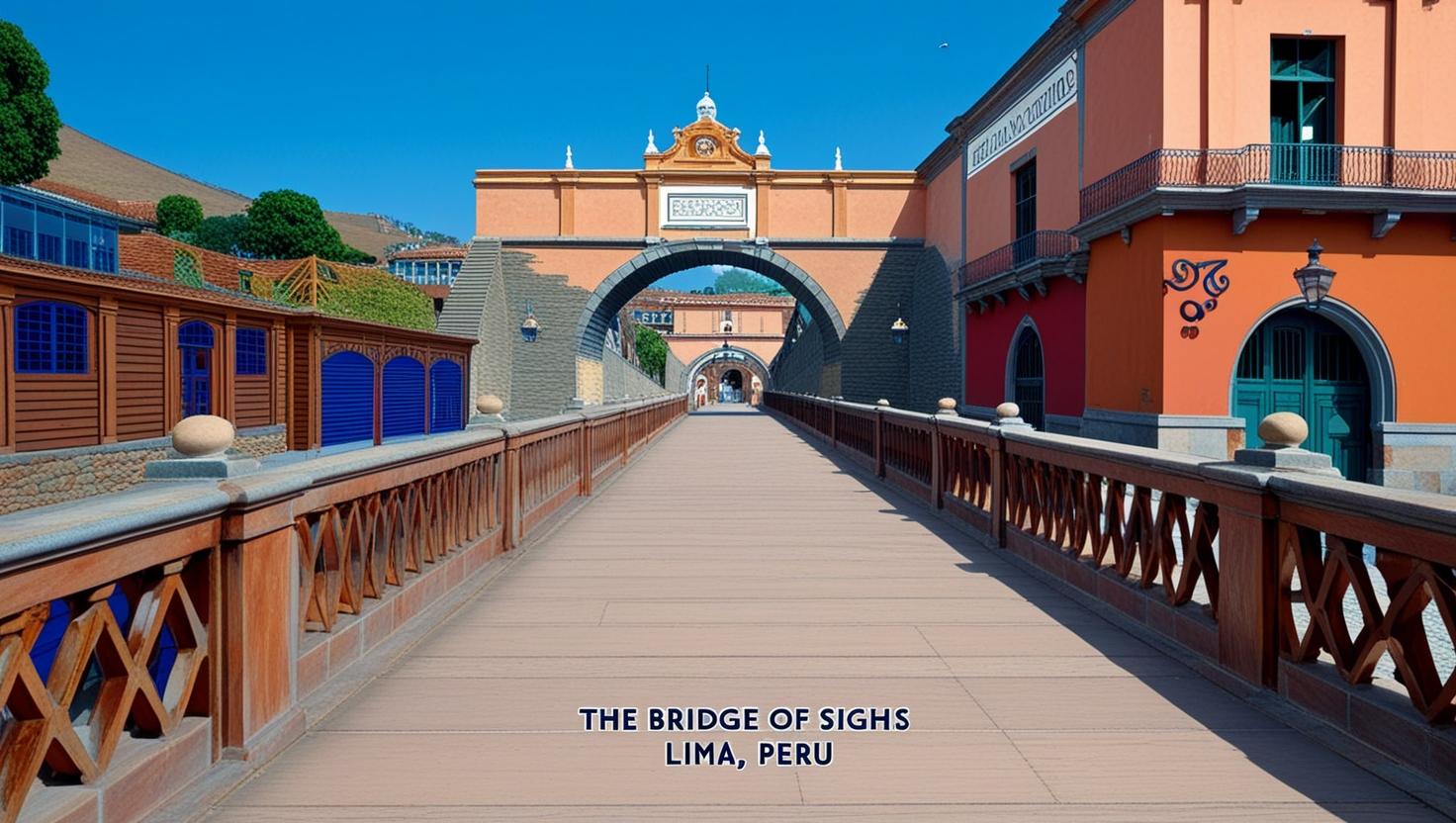
The Puente de los Suspiros in Barranco is Lima's most romantic bridge, immortalized by Chabuca Granda's music and surrounded by bohemian atmosphere, colorful colonial houses, and ocean views.
The Puente de los Suspiros — the Bridge of Sighs — is one of Lima’s most beloved and iconic landmarks. Located in the bohemian district of Barranco, this wooden bridge built in 1876 has inspired poets, musicians, and painters for generations. Immortalized in the music of the legendary Peruvian singer and composer Chabuca Granda, the bridge is much more than a simple crossing: it is a living symbol of romance, nostalgia, and the unique spirit of Lima.
History and Origins
The Puente de los Suspiros was built in 1876 to connect the upper part of Barranco with the lower area leading down to the Pacific Ocean. At the time, Barranco was a quiet seaside resort popular with Lima’s aristocracy, who came to enjoy the fresh sea air and the relaxed pace of life away from the capital’s bustle.
The bridge takes its name — “Bridge of Sighs” — from a local legend, and over the years it became the backdrop for countless romantic encounters and literary scenes. When Chabuca Granda immortalized it in her famous waltz “La Flor de la Canela” (though the bridge is most directly referenced in “El Puente de los Suspiros”), the site acquired an almost mythical status in Peruvian popular culture.
The Legend of the Bridge
One of the most charming traditions associated with the Puente de los Suspiros involves a simple but heartfelt ritual: if you cross the bridge while holding your breath and make a wish for love, the wish will be granted. Whether or not it works, the custom adds a touch of magic to every visit — and ensures that the bridge is always crossed with a mixture of anticipation and silent sighs.
Chabuca Granda and the Soul of Barranco
No visit to the Puente de los Suspiros is complete without reflecting on the legacy of Chabuca Granda (1920–1983), one of Peru’s greatest musical figures. Her waltzes and marineras captured the essence of Lima’s criolla culture — its warmth, its nostalgia, its humor, and its deep sense of place. Just steps from the bridge stands the Monument to Chabuca Granda, a beloved sculpture that has become a gathering place for admirers of her music and a popular spot for photographs.
The Surroundings: Barranco’s Bohemian Heart
The Puente de los Suspiros sits at the center of Barranco’s most atmospheric neighborhood, surrounded by:
- Colorful colonial houses with wooden balconies and bougainvillea-draped facades
- Art galleries, craft shops, and boutiques that make Barranco Lima’s creative hub
- Restaurants and cafés serving everything from traditional Peruvian food to contemporary cuisine
- The Ermita de Barranco: a small chapel perched on a cliff above the ocean, offering stunning views of the Pacific. The path leading down from the chapel to the sea is known as the “Bajada de los Baños” — one of Lima’s most picturesque walkways
The View and the Walk
From the bridge itself, you look down into a lush ravine filled with trees — a surprising pocket of greenery in the midst of the city. The sound of the ocean is never far away, and on clear days the Pacific horizon stretches to the west. Walking through this part of Barranco — across the bridge, along the Bajada de los Baños, past the Ermita, and down to the cliffs above the sea — is one of the most rewarding walks in Lima.
How to Get There
Barranco is located south of Miraflores, easily accessible from central Lima.
- Metropolitano: Take the bus to the Bulevar station in Barranco. From there, it is a short walk to the bridge.
- Taxi or rideshare: Ask for “Puente de los Suspiros, Barranco.” Most drivers know it well.
- On foot from Miraflores: The Malecón coastal path connects Miraflores to Barranco — a scenic walk of about 30–40 minutes along the cliffs above the Pacific.
Tips for Your Visit
- Visit in the late afternoon or evening, when the light is golden and the bohemian atmosphere of Barranco comes fully alive.
- Don’t miss the Ermita de Barranco and the Bajada de los Baños — they complete the experience of the bridge.
- Take time to explore the surrounding streets: Barranco is one of Lima’s most rewarding neighborhoods for walking, eating, and browsing galleries.
- The area around the bridge is generally safe and well-frequented, but be mindful of your belongings as you would anywhere in the city.
Hours
- The bridge and surrounding area are accessible at all times
- It is recommended to check directly at the site or with local agencies for guided tours
Admission Price
- Free access to the bridge and public areas
- Some nearby attractions or guided tours may charge an entrance fee