Bahuaja-Sonene National Park in Madre de Dios protects the southernmost tropical savanna on Earth, home to jaguars, giant otters, and an extraordinary array of biodiversity.
Bahuaja-Sonene National Park is one of Peru’s most remarkable protected areas, spanning the provinces of Tambopata in Madre de Dios and Calabaya and Sandia in Puno. Covering 1,091,416 hectares, it was formally established on July 17, 1996. A rapid ecological assessment conducted by the Wildlife Conservation Society revealed 365 new plant and animal species within the park. Today, Bahuaja-Sonene is home to 25.05% of Peru’s bird species and 33.66% of its mammal species — a testament to its extraordinary biological richness.
The park conserves a mosaic of habitats representing the southern and northern portions of the Amazon, protecting landscapes unique to Peru. These include the humid savanna known as the Pampas del Heath — the habitat of the marsh deer and the maned wolf — along with the formations of the Candamo Valley. The park also internally protects the cultural processes of the Ese Eja people, an indigenous community with deep ancestral ties to these territories. Its creation contributes to the sustainable development of both the Madre de Dios and Puno regions.
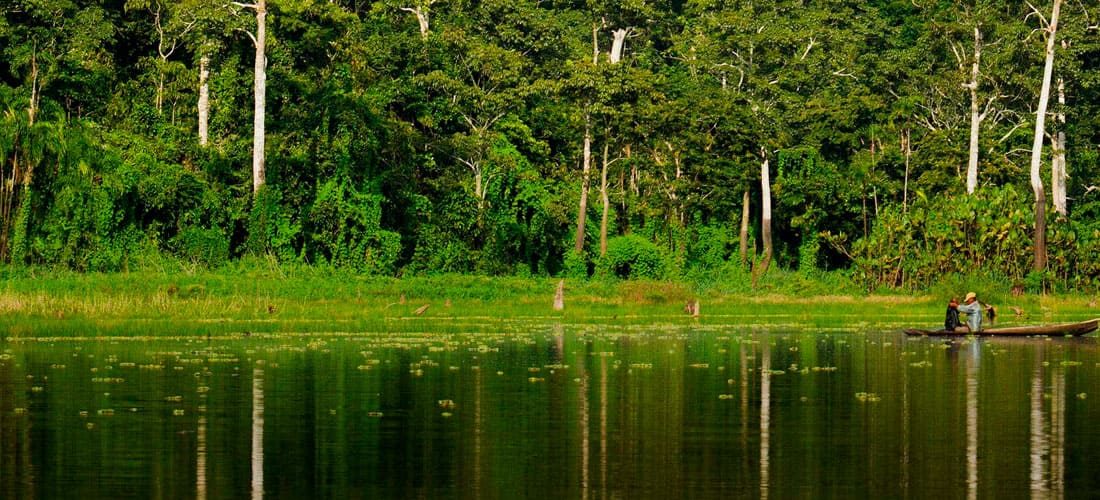
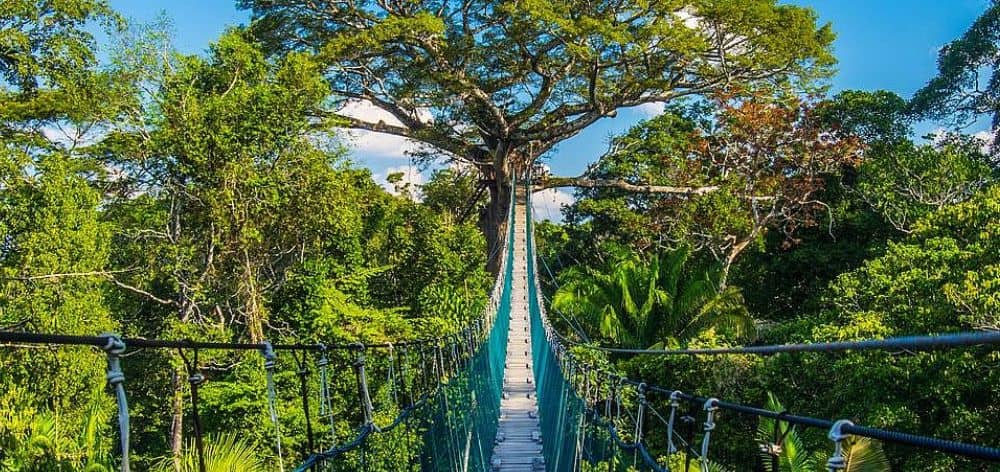
Located at the southwestern edge of the Amazonian rainforest ecoregion, the park encompasses habitats typical of both tropical and subtropical montane rainforest. The area features lakes and ponds, palm swamps, and seasonally flooded zones. One of its most notable habitats, the Pampa del Heath, was the reason a sanctuary was first created here in 1983 to protect it. This vast expanse, covered by grasses up to 2 meters tall, is dotted with small palm groves that become islands when the pampa floods completely between December and April. The Pampa del Heath also marks the southern boundary of the continental rainforest, beyond which the great Benian savanna begins.
Climate
Bahuaja-Sonene National Park sits at the convergence of humid tropical and subtropical Amazonian climates. The area receives annual rainfall of approximately 2,400 mm. The average temperature is 30°C, though it can reach up to 38°C in summer and drop as low as 8°C on cold fronts.
Flora and Fauna
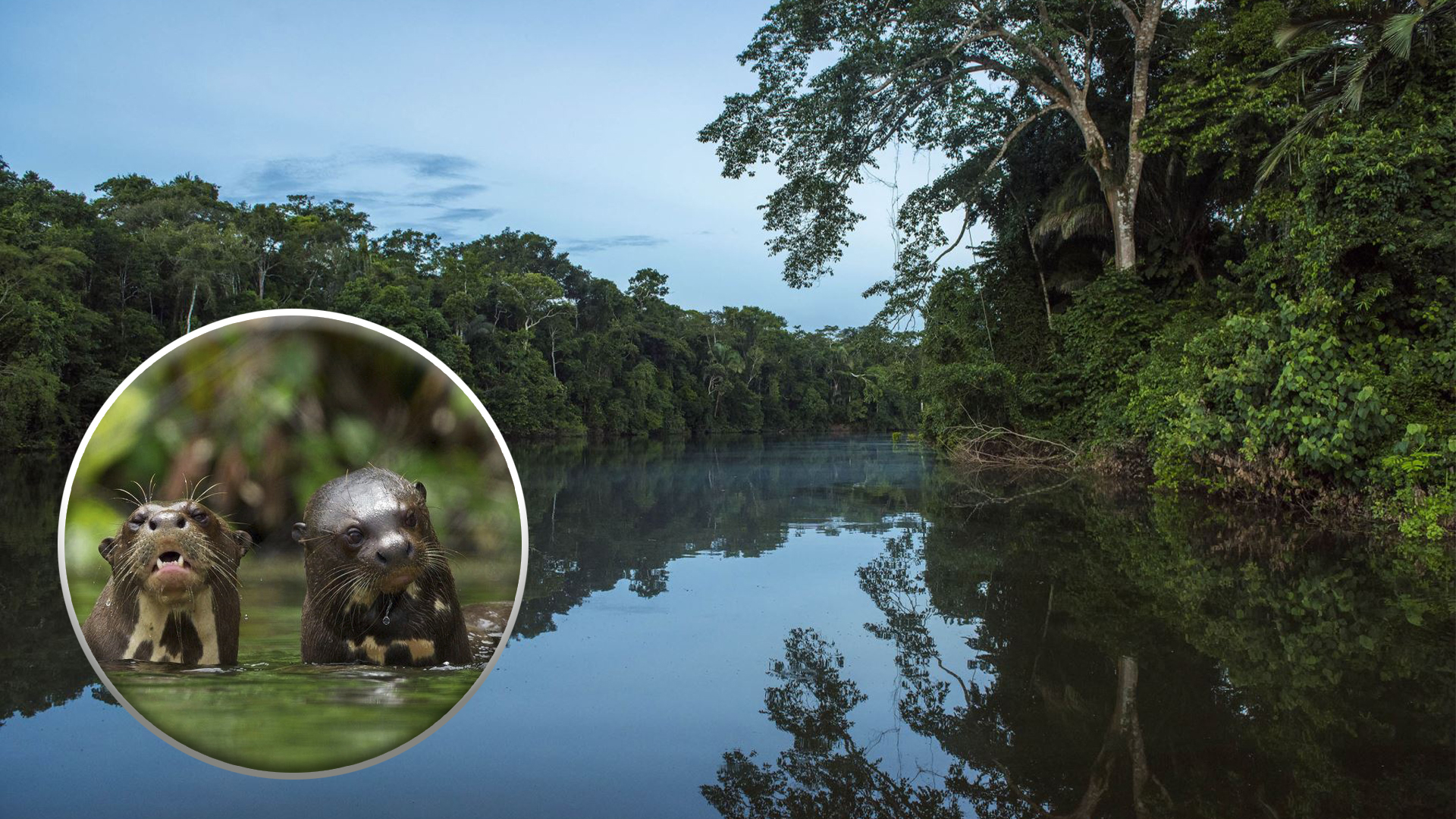
More than 600 bird species have been recorded in the park, 378 of them in the Heath River area alone. The most notable include seven species of macaws, roseate spoonbills, vultures, and harpy eagles. The park is also home to an estimated 180 mammal species, among them the bush dog, the giant river otter, the marsh deer, and the maned wolf — the last two are iconic pampa species found nowhere else in Peru.
Other notable mammals include giant anteaters, giant armadillos, the black spider monkey, and the jaguar. More than 50 reptile and amphibian species have been identified, including the black caiman, the anaconda, and the charapa turtle, along with 5 endemic frog species. The park also harbors 180 fish species and an astonishing 1,200 butterfly species.
The park’s flora is extremely diverse across all sectors and includes economically important timber species such as cedar, mahogany, Brazil nut, and various palms including pona, huasaí, and ungurahui.
The Pampas del Heath
Before this area was incorporated into the Bahuaja-Sonene zone, it was a national sanctuary. The Pampas del Heath is one of the most unique ecosystems in South America: a humid tropical savanna covering a vast plain with grasses up to two meters tall, reminiscent of the African savanna. During the rainy season, from December to April, the area floods and transforms into an enormous wetland.
Several indigenous communities have called this region home since ancient times, belonging to two ethnic groups: the Ese Eja and the Pukireri. An estimated 6,000 people live on the fringes of the park, distributed across four indigenous communities: Palma Real, Sonene, Infierno, and Kotsimba.
How to Get There
Puerto Maldonado to Bahuaja-Sonene National Park: Boat — approximately 4 to 6 hours
Hours
- Depends on the operator
Admission Price
- Foreigners: S/30.00 soles
- Adults: S/15.00 soles
- Children: S/8.00 soles
- (Reference prices — verify before visiting)