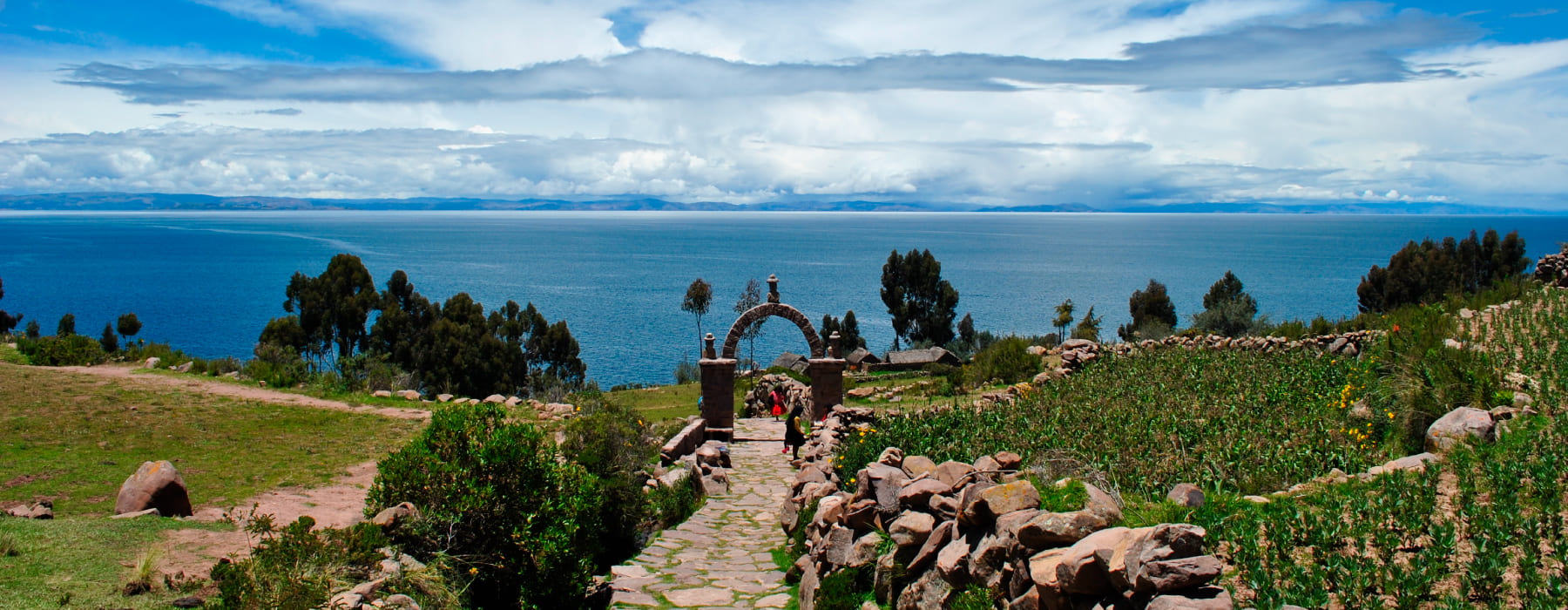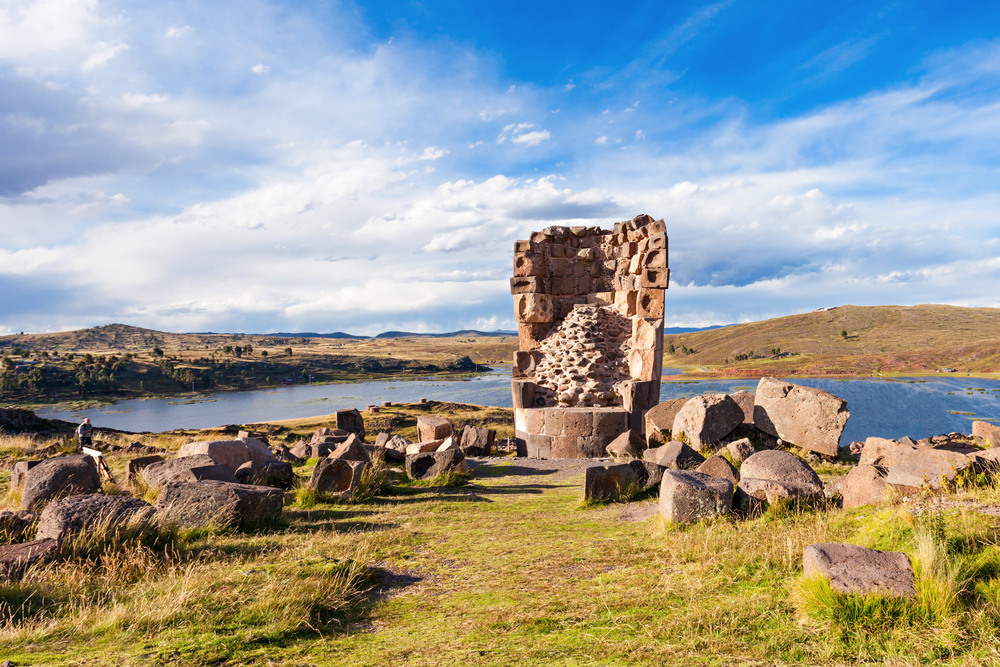
The Sillustani chullpas are imposing pre-Inca funerary towers 34 km from Puno, overlooking the Umayo Lagoon, built by the Colla and Inca cultures.
The Sillustani chullpas are located 34 kilometers from the city of Puno, on a peninsula extending into the blue waters of Laguna Umayo at an altitude of 4,000 meters above sea level. This remarkable lagoon, approximately 14 meters deep, is connected to the Chaullamayo River to the southwest and the Ccaccapunco River to the north, and ultimately drains into Lake Titicaca via the Illpa River.
Sillustani has approximately 90 chullpas in the form of inverted cones. According to historical records, the bodies of the highest authorities of the Colla culture were mummified in a fetal position before burial. These structures were the most important funerary monuments in the Inca Empire. The belongings of the deceased were placed alongside their bodies — a practice intended to preserve the respect owed to their authority and the symbols of their power across time. Objects found include gold and silver items, food offerings, and ceramic utensils.
On a peninsula in Laguna Umayo stands Sillustani — a necropolis where the extraordinary burials of the Colla culture can be admired, associated with the small village of Hatuncolla. The inverted-cone-shaped tomb towers known as chullpas are among the most remarkable pre-Columbian funerary structures anywhere in the Andes.
Who Were the Colla?
The Colla culture flourished between the 12th and 15th centuries. It was an important civilization that controlled much of the Andean altiplano. Its capital was Hatun Colla, located approximately 34 kilometers from the city of Puno and just 4 kilometers from Sillustani.
The Colla were an Aymara kingdom that was eventually conquered by the Incas during the reign of Inca Pachacutec. Their most important deity was Tunupa, the volcano god, endowed with great mystical powers, in whose honor the Colla performed ceremonies and sacrificial rituals.
This civilization is characterized by its unique architectural works and carved stonework, and the Sillustani Burial Tower complex is one of the finest examples of this ancient knowledge.
The Tombs of Sillustani
Known as chullpas, these tower-shaped structures served as pre-Columbian burial sites. The burials belong to the Kola (Colla) culture, which lived between 1200 and 1450 AD.
Sillustani consists of 90 chullpas, where the Colla community buried representatives of power and the elite, along with their belongings. The tallest of these structures reaches 12 meters in height.
The area has also yielded numerous caves and burials, along with ceramic and textile fragments dating to around 1400 BC, belonging to the Pucara, Tiahuanaco, and Colla cultures.
Characteristics of the Chullpas
The chullpas are circular stone towers designed to house the funerary remains of the principal authorities of the ancient Colao people (the altiplano). Most of the sacred chullpas stand around 12 meters tall and have a small entrance that always faces east, so that the deceased could communicate directly with the sun god. This entrance is deliberately very narrow.
The nobles, rulers, and priests of Sillustani were apparently the primary individuals buried here. The tops of the more recently built chullpas — those belonging to the Inca period — are decorated with large cornices. Some rocks display bas-relief carvings, mostly of lizards and serpents. Near the archaeological complex stands the Ruins Museum, which houses various works belonging to the Huanaco and Inca cultures.
How to Get There
Lima to Juliaca: Flight — approximately 1 hour 40 minutes
Juliaca to Sillustani: Bus — approximately 35 minutes
Hours
- Depends on the operator
- (Reference hours)
Admission Price
- Depends on the operator
- (Reference prices — verify before visiting)