On the route between Cusco and the Sacred Valley of the Incas, the Awanakancha production center offers a cultural symbol
On the route between Cusco and the Sacred Valley of the Incas, the Awanakancha production center offers a unique cultural experience: an Andean camelid farm, traditional textile demonstrations, and a shop selling high-quality traditional products. Fourteen indigenous communities take part in this center, grouping 420 families whose primary source of income comes from textile art.
The name Awanakancha comes from Quechua and literally means “the place where weaving happens,” which perfectly sums up the essence of this space: a living center where Andean textile tradition is preserved, practiced, and passed on to new generations.
The Four Andean Camelids
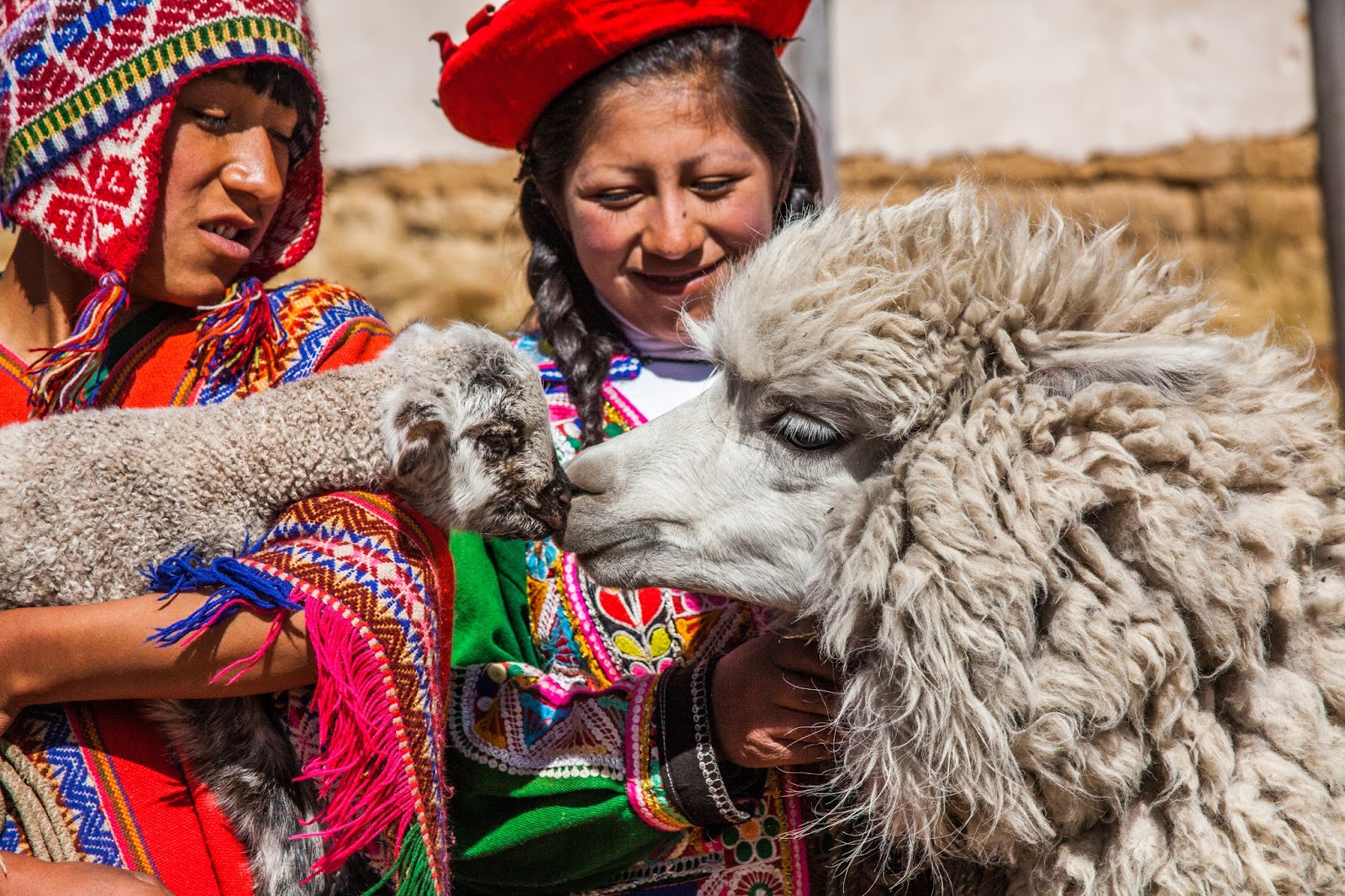
The first part of a visit to Awanakancha is direct contact with the four species of South American camelids that live at the center:
The vicuña: considered the finest animal in the Andes, it produces the most delicate and expensive natural fiber in the world. During the Inca Empire, only the Inca himself was permitted to wear vicuña garments. Today the vicuña is protected by law and its fiber can only be obtained through controlled shearing. One pound of vicuña fiber can be worth more than 500 US dollars on the international market.
The alpaca: the most common camelid and the primary source of fiber for the Andean textile industry. There are two breeds: the Huacaya (the most common, with fluffy fiber) and the Suri (with long, silky fiber). Alpaca fiber is warmer and lighter than sheep’s wool and does not cause allergies.
The llama: the largest of the camelids, historically used as a pack animal and also for its meat and wool. Its fiber is coarser than alpaca and is used primarily for rugs and rope.
The guanaco: the wild relative of the llama, more difficult to domesticate. Its fiber is fine, similar to vicuña but of lesser quality.
At Awanakancha, visitors can feed, pet, and take photos with these animals in a safe, supervised setting — an especially memorable experience for young children.
The Andean Textile Process
One of the most educational experiences at Awanakancha is observing and taking part in the complete process of transforming fiber into a finished garment. This process includes several stages:
Shearing: once a year, the camelids are shorn. The process is careful and does not harm the animal. An adult alpaca yields between 3 and 5 kilos of fiber.
Classification and selection: the fiber is sorted by hand according to fineness and natural color. Alpaca produces more than 22 natural shades ranging from pure white to deep black, with a wide range of browns, grays, and reds in between.
Washing: the fiber is washed in cold water to remove impurities without damaging the fibers.
Natural dyeing: the artisans of Awanakancha use exclusively natural dyes derived from Andean plants, minerals, and insects. The most famous is the cochineal, an insect that parasitizes nopal cacti and produces an intense red. Other plants such as walnut, muña, and indigo yield ochre, green, and blue tones.
Spinning: the fiber is turned into thread using the pushka (wooden spindle), the same tool Andean weavers have used for millennia. The artisans demonstrate this technique with a skill that only comes with years of practice.
Backstrap loom weaving: the backstrap loom is the most ancient weaving tool in the Andes. The weaver attaches one end of the loom to a post or tree and the other to her waist, controlling the tension with the movement of her body. This type of weaving allows complex geometric designs to be created with great precision.
The Textile Interpretation Center
The Awanakancha Textile Interpretation Center was inaugurated in 2014 as a space dedicated to the history and evolution of Peruvian textile arts. Here visitors can appreciate:
- The earliest archaeological evidence of textiles found in Peru (some more than 5,000 years old)
- Samples of different types of fabric woven with camelid fibers throughout history
- Tools used in craftsmanship from different periods
- Examples of textiles from the main pre-Columbian cultures: Chavín, Paracas, Nazca, Wari, Chimú, and Inca
The Shop and Products
At the end of the tour, the Awanakancha store offers a wide selection of textiles made from 100% alpaca and vicuña fiber: ponchos, table runners, chullos, blankets, capes, sweaters, gloves, and accessories of all kinds. Prices are direct from the producer, guaranteeing both quality and fair pricing that directly benefits the artisan families.
How to Get There
Cusco - Awanakancha
Bus: approx. 30 minutes
Hours
- Depends on the type of visit and tour operator
- It is recommended to check directly at the site or with local agencies
Admission Price
- Varies by operator and tour type
- It is recommended to verify current prices before visiting