The great Moche Valley in northern Peru houses two unique pre-Inca structures spanning more than 60 hectares. A must-see destination in La Libertad, Peru.
The great Moche Valley in northern Peru houses two unique pre-Inca structures spanning more than 60 hectares. Two buildings that represent the political and religious power of the Moche culture — the greatest civilization of Trujillo. The Moche were a powerful civilization that originated in the 1st century AD but mysteriously disappeared around the 9th century AD.
The Moche are one of the most important civilizations in Peruvian history, characterized by their cultural expression, adobe constructions, metalwork, and ceramics. They were also pioneers in hydraulic engineering, successfully solving the problem of water scarcity in the driest areas of their territory.
Huaca del Sol and Huaca de la Luna is undoubtedly the most impressive structure built by the Moche people, known for the beautiful artwork on its walls and its vast extent. The site was discovered about 28 years ago, so there is still much to learn and discover about these ancient pyramids. But here is a summary of everything known so far about Huaca del Sol and Huaca de la Luna.
Huaca del Sol – Moche Administrative Center
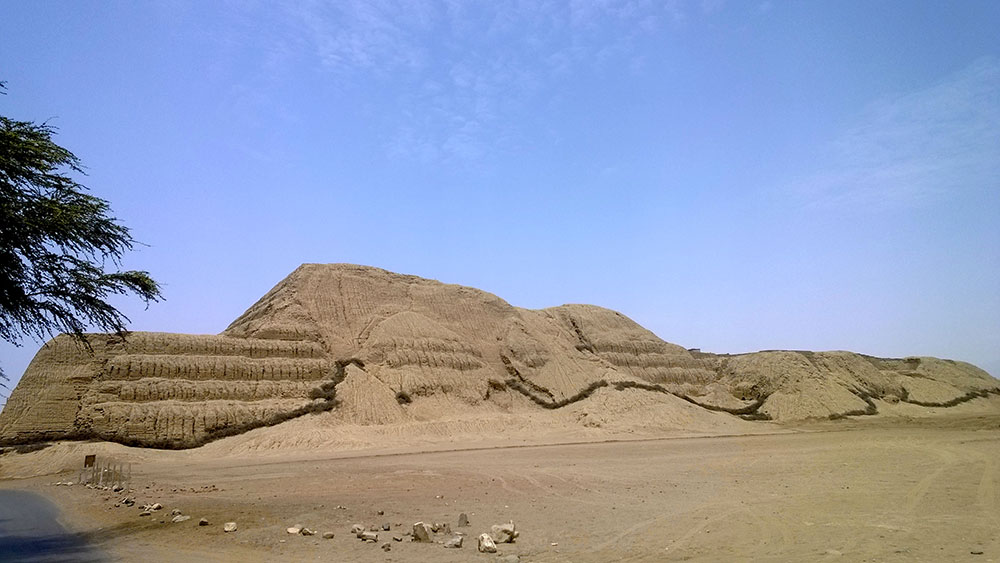
It is the largest temple in the archaeological complex, consisting of 5 terraces and standing 45 meters tall. It is probably the tallest pre-Columbian structure in Peru and Latin America. Unfortunately, not much information is available about this site because it was severely destroyed by the Spanish during colonization. The conquistadors managed to divert a river to divide the site, and in doing so demolished approximately one third of the Huaca.
Huaca de la Luna – Ceremonial Center
It is the most important building in the Huaca archaeological complex because it best preserves the expression of Moche culture. The site consists of several superimposed temples, each built in a different period. Huaca de la Luna is known as a place of worship, but it also has a dark past — the remains of 40 fallen warriors were found inside.
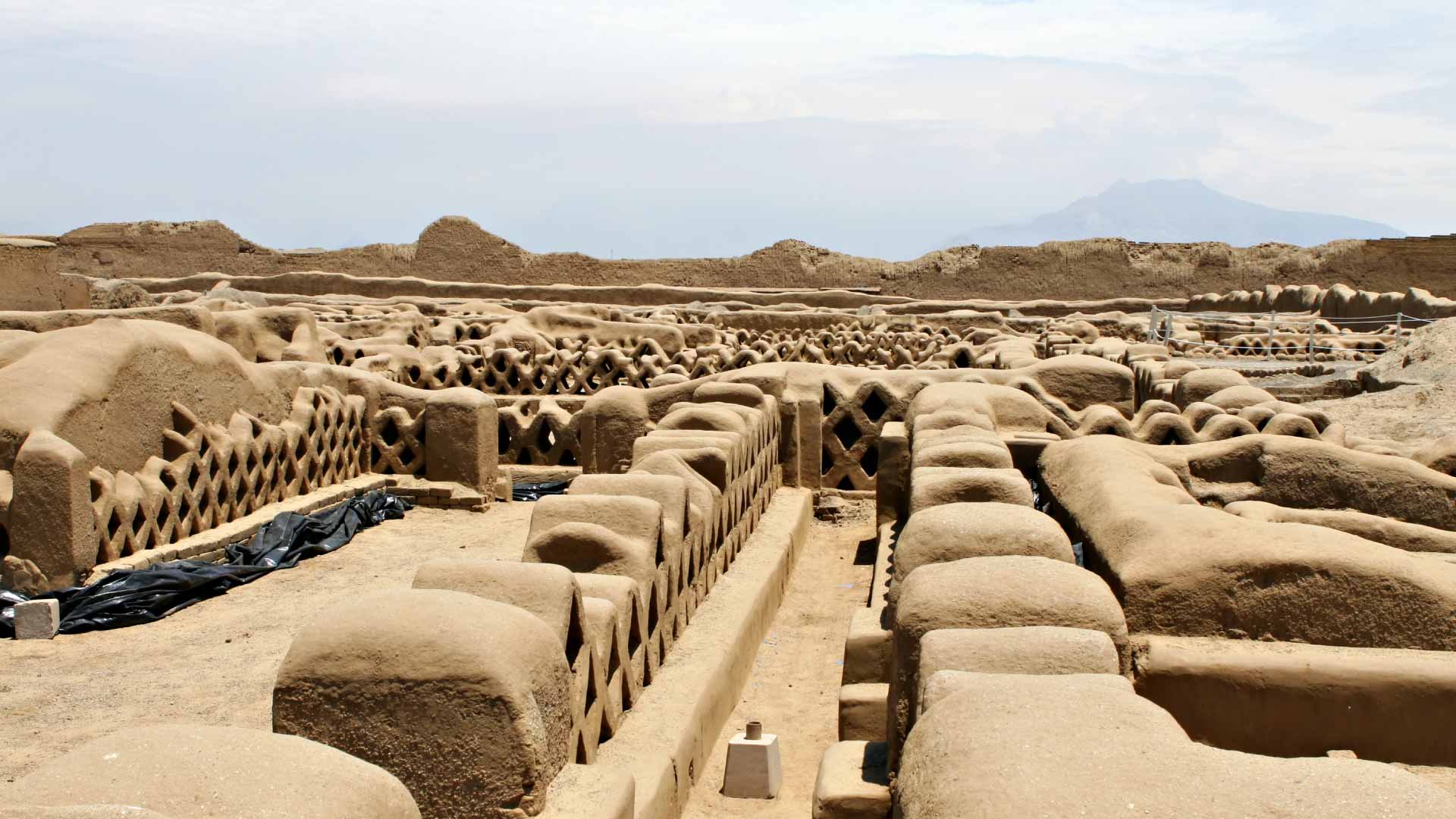
Huaca de la Luna features various murals painted in white, black, red, blue, and yellow, with pigments derived from different minerals. These paintings represent the main deity, known as the “Decapitator God,” along with various other customs of this ancient society.
Who Were the Moche?
The Moche culture was one of the most important societies in ancient Peru. Their empire stretched along the Peruvian coast between the 2nd and 5th centuries AD. The Moche were recognized for their extensive knowledge of agriculture and engineering, as well as being the finest metallurgists of their time in the Americas.
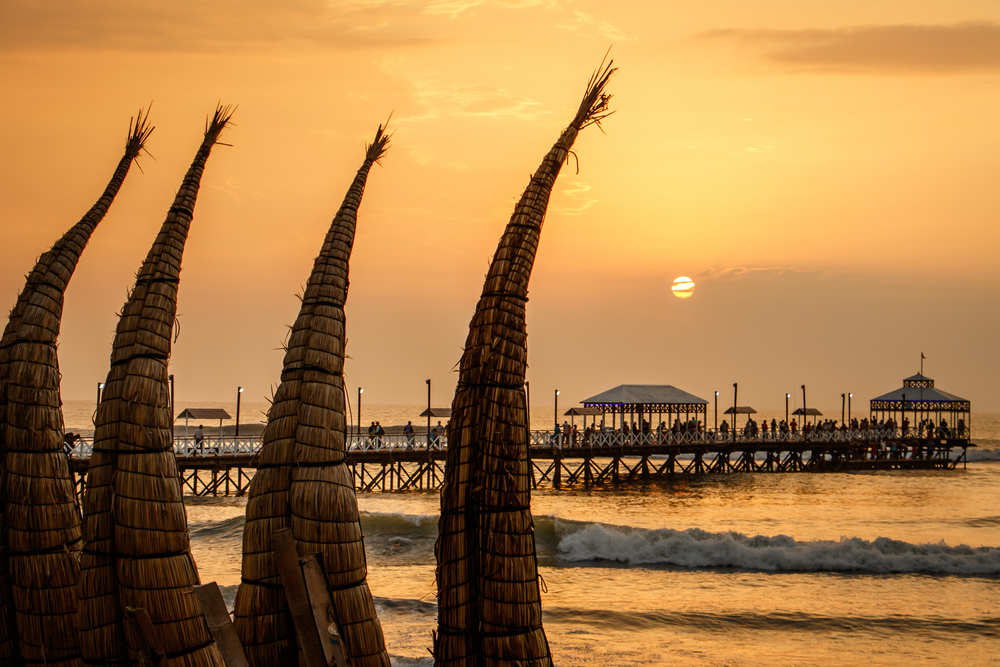
Due to the breadth and exquisite quality of their work, they are also considered the greatest potters of ancient Peru. They regularly depicted people, animals, gods, and ritual activities in paintings and sculptures with exceptional expressiveness and realism. This society was also known for its skilled seafarers, as they built totora reed boats called “Caballitos de Totora,” used by the fishermen of the era and also sailed as far as the coast of Ecuador.
How to Get There
Lima - Trujillo
Flight: approx. 1 hour
Trujillo – Huaca del Sol
Bus: approx. 15 minutes
Hours
- Monday - Saturday: 9:00 AM to 4:30 PM
- Approximate schedule
Admission Price
- Adult S/10.00 soles
- University students S/5.00 soles
- Approximate prices